.jpg)
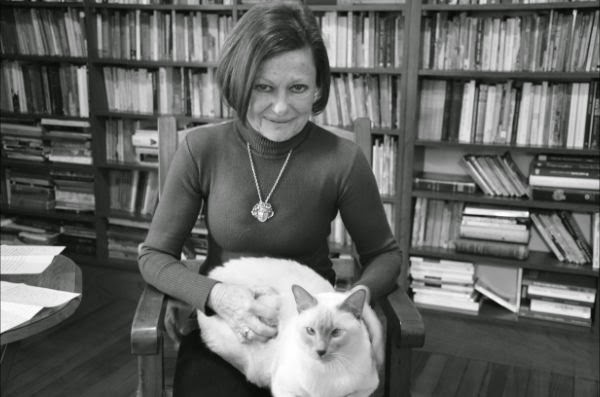
by Liliana Heker
Argentina, 2009
Liliana Heker, last heard from in these parts in relation to her warm, inviting fútbol short story "La música de los domingos" which I posted on back during Spanish Lit Month, makes her long-overdue second appearance on the blog thanks to the critical acumen on display in the 2006-2007 presentation she gave at the Biblioteca Nacional in Buenos Aires on the doom-worthy matter of "Las formas de la traición en la literatura argentina" ["Forms of Treachery and Betrayal in Argentinean Literature"].* What a great lecture topic! Beginning with "la modalidad más popular de nuestra literatura: las letras de tango" ["the most popular form of our literature: tango lyrics"] (391), Heker spends a good chunk of time examining the dizzying variety of ways in which "la traición es asunto dominante" ["treachery and betrayal constitute the dominant subject matter"] of tango music in its classic period between 1917 and the 1940s (Ibid.). Apart from what for me was a fairly useful reminder that there's no real reason not to consider tango lyrics as literature, Heker's examples are striking for what they reveal about the nature of the violence and the sociopathic behavior inspired by her theme in song--as evident in "A la luz del candil" ["By the Light of the Lamp"], where the "doble traición" ["double betrayal"] of the "narrator" by his girlfriend and his best friend leads the singer to more or less casually remark, "Señor, me traicionaban, y los maté a los dos. Las pruebas de la infamia las traigo en la maleta: las trenzas de mi china y el corazón de él" ["Sir, they were betraying me, and I killed them both. I carry the proof of the infamy in my suitcase: my girl's ponytail and his heart"], and in "Esta noche me emborracho" ["Tonight I Get Drunk"], where the singer cynically confesses that he betrayed his lover just for the "beauty" of the gratuitous act of betraying her ("Llegué a la traición por su hermosura") (391-392). Moving on to illustrations from the written word, Heker has some really good bits on the ambiguous nature of betrayal in the gaucho poem Martín Fierro, where the lawman Cruz betrays both his friends and the civil authorities to fight alongside the criminal and deserter Martín Fierro out of admiration for the latter's bravery, an antisocial act which muddies the waters of the morality lesson to be drawn from the story, and on various instances of riffs on betrayal and treachery to be found in Borges' short stories. One of the stories mentioned, "El indigno" ["Unworthy"], will be of particular interest to those of you attuned to the aesthetic/geological Arlt/Borges rift running throughout most of the length of 20th century Argentinean lit like a San Andreas Fault of the nation's fiction. As Heker tells it, the Borges story concerns a Jewish bookseller named Santiago Fischbein who, believing himself "indigno de la amistad" ["unworthy of the friendship"] of a man named Ferrari, rats out Ferrari for a crime he hadn't committed. The twist at the end of the story in the character Fischbein's words? "Días después, me dijeron que Ferrari trató de huir, pero que un balazo bastó. Los diarios, por supuesto, lo convertieron en el héroe que acaso nunca fue y que yo había soñado" ["Days later, I was told that Ferrari tried to get away, but that one shot was all it took. The newspapers, of course, made him the hero that perhaps he never was, but that I had dreamed of"] (395, with an English translation by Andrew Hurley lifted from Borges' Collected Fictions [New York: Penguin Classics, 1998, 357]). With this as a backdrop, things get good and juicy literary criticism wise when Heker next notes that it's "imposible no vincular este relato de Borges con el final de El juguete rabioso, donde también se consuma una traición, tal vez la traición canónica de la literatura argentina" ["impossible not to link this tale of Borges' with the ending of Mad Toy, where a betrayal is also carried out, perhaps the canonical betrayal in Argentinean literature"]. As she explains it, "cabe pensar que Borges premeditó el paralelismo entre su cuento y esa última parte de la novela de Arlt, titulada, justamente, Judas Iscariote. Los dos personajes, Santiago Fischbein y Silvio Astier, son adolescentes, los dos son invitados, como una prueba de confianza, a participar en un robo; los dos delatan a quien ha confiado en ellos" ["there is every reason to believe that Borges thought out in advance the parallelism between his story and that last part of Arlt's novel, which is titled, precisely, 'Judas Iscariot.' The two characters, Santiago Fischbein and Silvio Astier, are adolescents; they are both invited, as a test of confidence, to participate in a robbery; they both squeal on the person who has placed trust in them"]. Beyond that, Heker points out that there's even a minor character named Alt (i.e. sans the "r" in Arlt) in the story--although she cautions that it's the differences rather than the parallels which are "lo interesante" ["the interesting things"] to focus on in these two superficially similar works by Borges and Arlt featuring reprehensible betrayals (395-396). Having already dished out the red meat of tango records, Martín Fierro, Arlt and Borges, and many other writers I haven't had time to mention here in her treachery-and-betrayal themed survey of Argentinean literature, Heker offers up a dessert course of sorts with a nod to the traitor-like qualities of the narrator in works like Cortázar's long short story/novella "El perseguidor" ["The Pursuer"]--"un recurso, un modo de la astucia literaria" ["a means, a method of literary craftiness"] in which the narrator "finge ser un aliado del personaje narrado pero en realidad --y el lector sutilmente lo percibe-- se coloca fuera de ese personaje, de su sufrimiento, de su propio sentido de la existencia, de su locura" ["pretends to be an ally of the character being narrated but in reality--and the reader subtly perceives this--situates himself apart from that character, from his suffering, from his own sense of existence, from his madness"] (397)--and to "un modo de la traición intrínseco al oficio de componer ficciones: la traición del escritor" ["a mode of betrayal inherent in the craft of composing fiction: the writer's betrayal"] evident in the writer's reformulation of "su propia experiencia y la experiencia de los otros" ["his own experience and the experiences of others"] in the service of a work of art that just might, "sin garantías" ["without any guarantees"], offer up the possibility "de construir algo que tal vez trascienda esos fragmentos de vida y arme algo con luz propia" ["of erecting something that might transcend those fragments of life and cobble together something with its own light"] (398). Speaking of which, that's enough typing for now.
*For the record, I kind of cheated on that title translation somewhat. "Traición" can signify both "treachery" in a general sense and "betrayal" in the more personal sense, but I decided to double up on the meanings since I wasn't sure which of the two words Heker would have wanted to accord pride of place in her discussion.
Source
Liliana Heker's lecture on "Las formas de la traición en la literatura argentina" appears as the final chapter in the anthology La literatura argentina por escritores argentinos: narradores, poetas y dramaturgos coordinated by Sylvia Iparraguirre (Buenos Aires: Ediciones Biblioteca Nacional, 2009, 389-402). The chapter concludes with an interview of the writer conducted by Ángel Berlanga.


 Entradas


