
by Marguerite Yourcenar
France, 1951
Ce matin, l'idée m'est venue pour la première fois que mon corps, ce fidèle compagnon, cet ami plus sûr, mieux connu de moi que mon âme, n'est qu'un monstre sournois qui finira par dévorer son maître.
*
This morning the idea came to me for the first time that my body, this loyal companion, this surest of friends, better known by me than my soul, is nothing but a cunning monster which will end up devouring its master.
(Mémoires d'Hadrien, 11)
Mémoires d'Hadrien [barbarian title: Memoirs of Hadrian] is a profound, remarkably subtle, and understated work which convincingly passes itself off as a long letter from the dying Roman emperor Hadrian (76-138 C.E.) to a young protégé who would later become known to posterity as the philosopher emperor Marcus Aurelius. Although Yourcenar claims in the afterword that one of her goals in writing the work--a work that obsessed and then stymied the novelist for the better part of three decades--was to "refaire du dedans ce que les archéologues du XIXe siècle ont fait du dehors" ["redo from within what the 19th century archeologists did from without"] (327), her attempt to painstakingly reconstruct a vanished world--and in particular the mindset of a physically deteriorating 60-year old man who lived and loved so many centuries before us--would have fallen flat on its historical fiction face had the voice she created for her title character not succeeded so admirably and even paradigmatically. At the very least, I could relate to listening to him ruminate about his current afflictions and about his love for life in his youth and I could also believe it when he talked about the grief he endured as a result of the suicide of his lover Antinous--an event that is said to have caused the real life Hadrian "to weep like a woman" and an event that the grief-stricken fictional Hadrian at one point describes as "mon dialogue interrompu avec un fantôme" ["my interrupted dialogue with a phantom"] (291). A keen, affecting, but deceptively low-key production--proof of which is that the book's been trashed by multiple Amazon reviewers for having "no dialogue" and "no plot," those two cornerstones of the ancient epistolary tradition!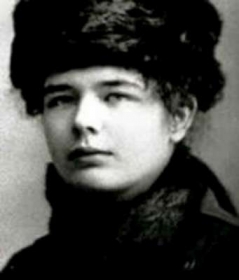
Marguerite Yourcenar (1903-1987)
Mémoires d'Hadrien was my September 2011 reading pick for the gone but not forgotten reading group known as the Wolves. Although I'm naturally a little embarrassed to be over a year late in getting to my own group read selection, I'm delighted to finally link to the non-slacker Wolfies' posts below.
E.L. Fay, This Book and I Could Be Friends
Frances, Nonsuch Book
Sarah, what we have here is a failure to communicate
E.L. Fay, This Book and I Could Be Friends
Frances, Nonsuch Book
Sarah, what we have here is a failure to communicate


 Entradas


