
by Nikolai Gogol [translated from the Russian by Richard Pevear and Larissa Volokhonsky]
Russia, 1842
Even though Gogol's sly, playful sense of humor probably seems pretty tame--well, perhaps "gentle" is a better word for it--after three posts in a row dedicated to "apocalyptic satirist" Karl Kraus last week, I thought it might be fun to spend some extended time with Chapter Eight of Dead Souls to check out the variety of comedic junk in the trunk to be found in the novel. This chapter is, of course, largely concerned with the elaborately chronicled hijinks where the scoundrel Chichikov goes girl crazy and then suffers an ignominious one-man rise and fall at the Governor's ball. However, Chichikov's player status isn't the only target of the narrative's, ahem, broad humor. While initially claiming that he's too "timid" as regards the ladies "to describe in vivid colors, so to speak, their qualities of soul" (158), the author eventually relents and begins to paint with what he claims is his limited palette a portrait of the people of the provincial town of N. The women, he writes, "surpassed even the ladies of Petersburg and Moscow" in matters of etiquette: "The visiting card, even if written on a deuce of clubs or ace of diamonds, was a very sacred thing" (159). Duels between their husbands "of course, did not take place between them, because they were all civil servants"; instead, "they tried to do each other dirt wherever possible, which, as everyone knows, can sometimes be worse than any duel" (ibid.). Finally, the level of civility was such that "the ladies of the town of N. were distinguished, like many Petersburg ladies, by an extraordinary prudence and propriety in their words and expressions." Gogol explains it like this: "Never would they say: 'I blew my nose,' 'I sweated,' 'I spat,' but rather: 'I relieved my nose' or 'I resorted to my handkerchief.'" And even better, like this: "It was in no case possible to say: 'This glass or this plate stinks.' And it was even impossible to say anything that hinted at it, but instead they would say: 'This glass is being naughty,' or something of the sort" (160).
"This glass is being naughty," while deserving of a YouTube gone viral moment in its own right as part of this chapter's send-up of the novel of manners, ought not distract us from the way Dead Souls repeatedly links putting on airs with a literary representation of highbrow "Russian-ness" for comedic effect. You'll note, for example, that it's amid scenes like this where, at the Governor's ball and suddenly receiving an undue amount of attention from the women of the town now that he's temporarily suspected of being a millionaire bachelor, Chichikov stops to reflect on the "moist, velvety, sugary [and] God knows whatnot else!" lustre of the female sex (165)--and, giving up, finally mutters to himself that women are "the cockety half of mankind, and nothing else!" Gogol, perhaps chivalrously, intervenes at this point (166):
Beg pardon! It seems a little word picked up in the street just flew out of our hero's mouth. No help for it! Such is the writer's position in Russia! Anyway, if a word from the street has got into a book, it is not the writer's fault, the fault is with the readers, high-society readers most of all: they are the first not to use a single decent Russian word, but French, German, and English they gladly dispense in greater quantity than one might wish, and dispense even preserving all possible pronunciations: French through the nose and with a burr, English they pronounce in the manner of a bird, and even assume a bird's physiognomy, and they will even laugh at anyone who cannot assume a bird's physiognomy; and they will only not dispense anything Russian, unless perhaps out of patriotism they build themselves a Russian-style cottage as a country house. Such are readers of the highest ranks, and along with them all those who count themselves among the higher ranks! And yet what exactingness! They absolutely insist that everything be written in the most strict, purified, and noble of tongues--in short, they want the Russian tongue suddenly to descend from the clouds on its own, all properly finished, and settle right on their tongue, leaving them nothing to do but gape their mouths open and stick it out. Of course, the female half of mankind is a puzzle; but our worthy readers, it must be confessed, are even more of a puzzle.
Although Chichikov's poor choice of words--the so-called word from the street ("cockety") that Gogol apparently fabricated in Russian just as translators Pevear and Volokhonsky have in converting it into English nearly 150 years later--is clearly just a pretext for the author to take his "worthy readers" to task for the crimes he accuses them of, it's particularly ironic within the context of the novel as a whole that he chides not only "readers of the highest ranks" but "along with them all those who count themselves among the higher ranks!" As readers, is there a Chichikovian poseur in each of us? Also, it's a pleasure to behold the author's subversive streak regarding language matters: the Russian of the elite and the literary language that "high-society readers" supposedly want most of all comes in any language but Russian according to the complaint; and yet, the novel's would-be real spoken Russian, "a little word picked up in the street," is coarse and/or an invention at best. What's a pompous language patriot to do?
Whatever the answer to that question, Gogol continues turning up the heat on Chichikov and the mannered party scenes of the modern novel on the very next page. First we learn that "Chichikov was so taken up by his conversations with the ladies--or, better, the ladies so took him up and whirled him around with their conversations, adding a heap of the most fanciful and subtle allegories, which all had to be penetrated, even making sweat stand out on his brow--that he forgot to fulfill his duty to propriety and go up to the hostess first of all" (167). Then we learn that the author himself, failing to live up to the genre requirements demanded by the moment, cannot accurately transmit the conversation that took place next (such is his discomfiture that one almost imagines sweat standing out on his brow as well):
I cannot convey the lady's words exactly, something was said full of great courtesy, in the spirit in which ladies and gentlemen express themselves in the novellas of our society writers, who love to describe drawing rooms and boast of their knowledge of high tone, in the spirit of: "Can it be that your heart is so possessed that there is no longer any room, not even the tiniest corner, for those whom you have mercilessly forgotten?" Our hero turned to the governor's wife that same instant and was ready to deliver his reply, probably in no way inferior to those delivered in fashionable novels by the Zvonskys, the Linskys, the Lidins, the Gremins, and various other adroit military men, when, chancing to raise his eyes, he stopped suddenly, as if stunned by a blow (167).
The cause of the blow-like blow received by Chichikov? Cherchez la femme Nikita:
Before him stood not only the governor's wife: on her arm she had a young girl of sixteen, a fresh blonde with fine and trim features, a sharp chin, a charmingly rounded face, the sort an artist would choose as a model for a Madonna, a sort rarely occurring in Russia, where everything likes to be on a vast scale, whatever there is--mountains and forests and steppes, and faces and lips and feet; the same blonde he had met on the road, leaving Nozdryov's, when, owing to the stupidity either of the coachmen or of the horses, their carriages had so strangely collided, entangling their harnesses, and Uncle Mityai and Uncle Minyai had set about disentangling the affair. Chichikov was so abashed that he was unable to utter a single sensible word and mumbled devil knows what, something no Gremin or Zvonsky or Lidin would ever have said (167-168).
Regrouping after being momentarily tongue-tied, the understandably smitten Chichikov recovers enough of his ineffectual party patter to elicit a stifled yawn out of his would-be love interest. Later, an even worse disaster befalls him and the party deteriorates to the point where "officers, ladies, tailcoats--everything became courteous, even to the point of cloying" and "one colonel offered a dish of sauce to a lady on the tip of his bare sword" (175). Back in his room afterward, like a man who has attended a party he didn't want to go to and knew he wouldn't enjoy, Chichikov rails against the idiocy of balls before concluding with an unexpected question: "So, what can possibly be squeezed out of this ball? So, what if some writer, say, decided to describe the whole scene as it is? So, then in the book it would come out just as witless as in nature. What is it--moral? immoral? It's simply devil-knows-what! You'd spit and close the book" (176).
Spitting and closing the book aside, Chichikov's four questions about the ball probably provide as fine an example as any of how Gogol's often earthy humor frequently returns to what readers should expect out of his novel/epic "poem" in prose. Gogol provokes his readers almost as often as he picks on poor Chichikov or uses exclamation points to punctuate his sentences. It's all in good fun, but the authorial intent is probably just as aesthetically pleasing as Kraus' was minus the eschatological baggage of course. Given that I've probably said too much already, I'll get out of the way and let Gogol or "the author" have the last word. The rant that follows is from Chapter Eleven, pages 228-229:
It is highly doubtful that readers will like the hero we have chosen. The ladies will not like him, that can be said positively, for the ladies demand that a hero be a decided perfection, and if there is any little spot on his soul or body, it means trouble! However deeply the author peers into his soul, reflecting his image more purely than a mirror, it will be to no avail. The very plumpness and middle age of Chichikov will do him great harm: plumpness will in no way be forgiven a hero, and a great many ladies will turn away, saying: "Fie, ugly thing!" Alas! all this is known to the author, yet for all that he cannot take a virtuous man as his hero, but...perhaps in this same story some other, as yet untouched strings will be felt, the inestimabale wealth of the Russian spirit will step forth, a man endowed with divine valor will pass by, or some wondrous Russian maiden such as can be found nowhere in the world, with all the marvelous beauty of a woman's soul, all magnanimous aspiration and self-denial. And all virtuous people of other tribes will seem dead next to them, as a book is dead next to the living word! Russian movements will arise...and it will be seen how deeply that which has only grazed the nature of other peoples has sunk into the Slavic nature... But wherefore and why speak of what lies ahead? It is unbecoming for the author, a man long since taught by a stern inner life and the refreshing sobriety of solitude, to forget himself like a youth. Everything in its turn, its place, its time! But all the same the virtuous man has not been taken as a hero. And it is even possible to say why he has not been taken. Because it is time finally to give the poor virtuous man a rest, because the phrase "virtuous man" idly circulates on all lips; because the virtuous man has been turned into a horse, and there is no writer who has not driven him, urging him on with a whip and whatever else is handy; because the virtuous man has been so worn out that there is not even the ghost of any virtue left in him, but only skin and ribs instead of a body; because the virtuous man is invoked hypocritically; because the virtuous man is not respected! No, it is time finally to hitch up a scoundrel. And so, let us hitch up a scoundrel.

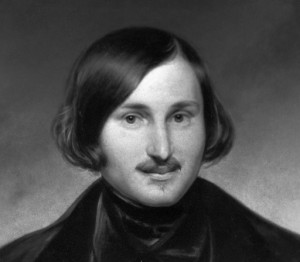
Nikolai Gogol (1809-1852)



 Entradas


