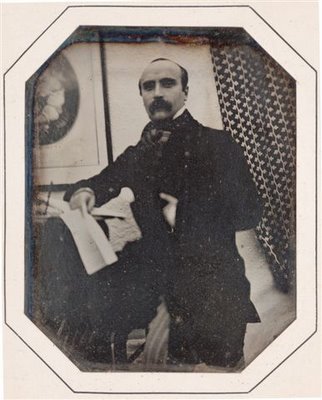
Mostrando las entradas con la etiqueta Gustave Flaubert. Mostrar todas las entradas

sábado, 30 de junio de 2012

"Eugénie Grandet" et "L'Éducation sentimentale" Group Reads

Eugénie Grandet

Sentimental Education

With Spanish Lit Month finally set to kick off within a few short hours now, estimados lectores/chers lecteurs, I thought I'd take advantage of what little time is left in June to bring your attention to two French group reads (oui, deux of them!) that I'm looking forward to participating in this summer.  First up is Balzac's 1833 Eugénie Grandet, which Bellezza of Dolce Bellezza and I will be discussing sometime during the last three days of July.  Next up is Flaubert's 1869 L'Éducation sentimentale [Sentimental Education], which Frances of Nonsuch Book, Bellezza, and I will be posting on during the weekend of August 24th-26th.  Feel free to join us for either or both of these works if interested and time permits.

jueves, 28 de octubre de 2010

Madame Bovary, troisième partie

Madame Bovary (GF Flammarion, 2006)
by Gustave Flaubert
France, 1857

"Madame Bovary itself neither praises adultery in order to condemn marriage nor attacks adultery in order to defend marriage.  It creates instead a drastically unstable social and ethical universe in which as fundamental an opposition as that between adultery and marriage threatens to become a distinction without a difference.  Emma's real tragedy is that little of substance differentiates her husband from her lovers, her ordinary reality from her imagined one.  Seeming opposites become deadly repetitions of one another, and the despised husband seems in the end to be the only one who loves her.  Not only does he keep an adoring vigil at her coffin while others sleep or are absent; he ends his life imitating hers as he establishes Emma as an undefiled romantic idol despite all evidence to the contrary."  --Dominick LaCapra, "Two Trials," 729, in Denis Hollier, ed., A New History of French Literature (Cambridge: Harvard University Press, 2001).

True story.  I was so shaken when I finished Madame Bovary the other night that I almost immediately e-mailed Frances thanking her for recommending the book but warning her that I might not have my emotions in check in time for this post.  A slight exaggeration, of course, but really, what a stupendous read!  In any event, the Dominick LaCapra quotation above (part of a short but incisive article dealing with the twin obscenity trials brought against Flaubert and Baudelaire in 1857) calmly touches on a couple of things I thought were key to the novel's success.  First, there's that whole business about the "unstable social and ethical universe" created by Flaubert.  This, in conjunction with a lack of moralizing in the novel, made the characterizations feel richer, more unpredictable, more lifelike to me.  Secondly, I think LaCapra is right on target in pointing out that the "real tragedy" in Madame Bovary isn't the fact that Emma feels trapped in an unfulfilling marriage but that Charles--for all his flaws as the despised husband--is also the one "true" love in Emma's life.  At the very least, this notion, just as much as the disturbing scene where the title character calmly ingests a mouthful of arsenic to achieve peace with the universe, is one of the things that really, really got to me as the novel wound down to its unforgiving end.

Madame Bovary rough draft

The unique qualities of Flaubert's EpiPen style prose and storytelling notwithstanding, I'm not sure he could have gotten under my skin with such a misanthropic tale about adultery and unrequited love on technique alone.  I think I finally sensed a hint of the soul behind the ruthless wordsmith.  That having been said, there's no denying that the writing did another number on me here.  I loved, for example, how the "moral" instability alluded to above also extended to the style of writing itself--for, like the scenes late in Part II where Emma's imagination or POV seemed to either merge with or actively be at war with nature by turns, the one in III, 8 where she's leaving Rodolphe's estate after he's rejected her plea for financial assistance seems to go beyond mere "realism":

"La nuit tombait, des corneilles volaient.

Il lui sembla tout à coup que des globules couleur de feu éclataient dans l'air comme des balles fulminantes en s'aplatissant, et tournaient, tournaient, pour aller se fondre dans la neige, entre les branches des arbres.  Au milieu de chacun d'eux, la figure de Rodolphe apparaissait.  Ils se multiplièrent, et ils se rapprochaient, la pénétraient; tout disparut.  Elle reconnut les lumières des maisons, qui rayonnaient de loin dans le brouillard" (388).

["Night was falling, rooks were flying overhead.

It seemed to her suddenly that little flame-colored globes were exploding in the air like bullets bursting and flattening, and spinning over and over, then melting on the snow, among the branches of the trees.  In the center of each, Rodolphe's face appeared.  They were multiplying, coming together, penetrating her; everything vanished.  She recognized the lights of the houses, shining from a distance through the mist" (Lydia Davis' translation, 278).]

In addition to these wonderful set-pieces, I was also impressed by Flaubert's often biting use of one-liners for dramatic "miniaturizations" and Tacitean summations of character.  Three in particular struck a chord with me:  "Ce furent trois jours pleins, exquis, splendides, une vraie lune de miel" ["They were three full, exquisite, splendid, days, a real honeymoon"] we read in III, 3, on the subject of one of Emma's and Léon's adulterous trysts (328 in Flaubert, 227 in Davis); "Mais le dénigrement de ceux que nous aimons toujours nous en détache quelque peu.  Il ne faut pas toucher aux idoles: la dorure en reste aux mains" ["But vilifying those we love always detaches us from them a little.  We should not touch our idols: their gilding will remain on our hands"], we're warned in III, 6, after a lovers' quarrel (355, 250 in Davis); "Et il la regardait avec des yeux d'une tendresse comme elle n'en avait jamais vu" ["And he looked at her with a love in his eyes that she had never seen before"], we read in III, 8, finally encountering a scene where Charles is at last appreciated in a way by his spouse--on her deathbed (391, 281 in Davis).  Whilst I'm still not entirely sure what Flaubert's treatment of his characters reveals about his worldview as a person, I have to say that this quintessentially depressing novel of his maintained my interest down to the very last line (itself a master stroke of bleakness, by the way).  Génial!  (http://www.editions.flammarion.com/)


jueves, 21 de octubre de 2010

Madame Bovary, deuxième partie

Madame Bovary (GF Flammarion, 2006)
by Gustave Flaubert
France, 1857

"Ce qui me semble beau, ce que je voudrais faire, c'est un livre sur rien, un livre sans attache extérieure, qui se tiendrait de lui-même par la force interne de son style, comme la terre, sans être soutenue, se tient en l'air, un livre qui n'aurait presque pas de sujet, ou du moins où le sujet serait presque invisible, si cela se peut.  Les oeuvres les plus belles sont celles où il y a le moins de matière".


["What seems beautiful to me, what I would like to do, is a book about nothing, a book without external ties, that would hold itself together by the internal force of its style, like the earth, without being propped up, suspending itself in the air, a book which would have nearly no subject, or at least one where the subject would be nearly invisible, if that is possible.  The most beautiful works are those where there are the least amounts of subject matter."]

--Gustave Flaubert, Correspondance, II, 345, as cited by Bernard Ajac in his introduction to the GF Flammarion edition of Madame Bovary, 20 [my translation].

As late as a third of the way into Madame Bovary, I was still admiring Flaubert's technique from a distance more than I was sinking my teeth into his story.  Provocative narrative point of view?  Check.  Credible insight into the emotional and psychological states of his characters?  Check.  Gripping reading?  Well, let me get back to you on that, I thought.  Yet somewhere between then and the end of Part II, the guy began to just work me over with regularity with his writing.  Here are a few of my favorite examples.  In Part II, Chapter 9, Emma finally succumbs to temptation with the cad Rodolphe.  Flaubert initially merely says that Emma "s'abandonna" (228) ["gave herself up to him" in Lydia Davis' translation (141)].  In the masterful paragraph that follows, however, he adds a tour de force of a descriptive passage linking Emma's interior world with the exterior or natural world:

"Le silence était partout; quelque chose de doux semblait sortir des arbres; elle sentait son coeur, dont les battements recommençaient, et le sang circuler dans sa chair comme un fleuve de lait.  Alors, elle entendit tout au loin, au-delà du bois, sur les autres collines, un cri vague et prolongé, une voix qui se traînait, et elle l'écoutait silencieusement, se mêlant comme une musique aux dernières vibrations de ses nerfs émus" (228).

["Silence was everywhere; something mild seemed to be coming forth from the trees; she could feel her heart beginning to beat again, and her blood flowing through her flesh like a river of milk.  Then, from far away beyond the woods, on the other hills, she heard a vague, prolonged cry, a voice that lingered, and she listened to it in silence as it lost itself like a kind of music in the last vibrations of her tingling nerves" (Davis, 141).]

While I don't think it's necessary to pin down whether this is Emma's orgasm being portrayed as a form of out of body experience witnessed by her or if nature itself is having an orgasmic response on the character's behalf, that, my friends, is some attention-grabbing writing!

As astonishing as that scene is, note how ruthlessly Flaubert--the writer as hooded executioner--manages to bracket the big moment.  In Part II, Chapter 11, the clubfooted Hippolyte is about to have one of his legs amputated because of a botched operation performed by Charles at Emma's urging.  The narrator tells us that:

"Au milieu du silence qui emplissait le village, un cri déchirant traversa l'air.  Bovary devint pâle à s'évanouir.  Elle fronça les sourcils d'un geste nerveux, puis continua.  C'était pour lui, cependant, pour cet être, pour cet homme qui ne comprenait rien, qui ne sentait rien!  Car il était là, tout tranquillement, et sans même se douter que le ridicule de son nom allait désormais la salir comme lui.  Elle avait fait des efforts pour l'aimer, et elle s'était repentie en pleurant d'avoir cédé à un autre" (253).

["In the midst of the silence that hung over the village, a harrowing cry rang out through the air.  Bovary turned so white he seemed about to faint.  Her brows contracted in a nervous gesture, then she went on.  Yet it was for him, for this creature, for this man who understood nothing, who felt nothing!--for there he was, quite calm, not even suspecting that from now on, the ridicule attached to his name was going to soil her as well as him.  She had made efforts to love him, and she had repented in tears for having yielded to another" (Davis, 162).]

In the earlier scene, a cry of joy accompanies the moment where Emma yields her body to another for the first time.  In the latter scene, a cry of pain accompanies the moment where Emma finally gives her heart and soul away as well.  The narrative calls attention to the betrayal with the blink-and-you'll-miss-it shift between the protagonists' points of view right after the scream (first Bovary's and then his wife's) and from the fact that the quarreling Emma and Rodolphe are reunited a page later.  One senses that Emma's latest rejection of Charles is final.

Of course, Emma herself will be rejected by Rodolphe by letter before too long.  Rodolphe's letter-writing scene, which takes up the first half of chapter 13, is one of the most vicious things I've read all year. It's also more than a little bit funny given what we know about Emma's lover's "true nature."  Yet as flamboyantly meanspirited as the scene is, Flaubert manages to play off of it and even surpass it with an altogether different type of tone later in the chapter.  Note, for example, the build-up to the sequence where Emma is contemplating jumping off a balcony as a solution to feeling trapped and jilted:

"Le rayon lumineux qui montait d'en bas directement tirait vers l'abîme le poids de son corps.  Il lui semblait que le sol de la place oscillant s'élevait le long des murs, et que le plancher s'inclinait par le bout, à la manière d'un vaisseau qui tangue.  Elle se tenait tout au bord, presque suspendue, entourée d'un grand espace.  Le bleu du ciel l'envahissait, l'air circulait dans sa tête creuse, elle n'avait qu'à céder, qu'à se laisser prendre; et le ronflement du tour ne discontinuait pas, comme une voix furieuse qui l'appelait" (274).

["The ray of light that rose directly up to her from below was pulling the weight of her body down toward the abyss.  It seemed to her the ground in the village square was swaying back and forth and rising along the walls, and that the floor was tipping down at the end, like a vessel pitching.  She was standing right at the edge, almost suspended, surrounded by a great empty space.  The blue of the sky was coming into her, the air circulating inside her hollow skull, she had only to give in, to let herself be taken; and the whirring of the lathe never stopped, like a furious voice calling her" (Davis, 180).]

Considering that the very landscape of Yonville-l'Abbaye seems to be approaching Emma Bovary here, inviting the character to kill herself, this is absolutely chilling stuff.  It gets even more chilling when you stop to think about the parallels between Madame Bovary, suspended in space between life and death, and the book that's named after her, a work "suspending itself in the air" in Flaubert's aesthetic conception of the beautiful.  While I'm not entirely sure what the novelist's end game is yet or whether Madame Bovary could be considered "a book about nothing," suffice it to say that it's writing like this that makes up for Flaubert's somewhat "banal" theme.  Wow.  (http://www.editions.flammarion.com/)

Flaubert

Blogger extraordinaire Frances of Nonsuch Book is hosting the Madame Bovary readalong that I'm participating in.  Click here for her round-up of all readalong posts on Part II and/or here for my comments on Part I.

jueves, 14 de octubre de 2010

Madame Bovary, première partie

Madame Bovary (GF Flammarion, 2006)
by Gustave Flaubert
France, 1857

Messieurs, M. Gustave Flaubert est accusé devant vous d'avoir fait un mauvais livre, d'avoir, dans ce livre, outragé la morale publique et la religion.  M. Gustave Flaubert est auprès de moi; il affirme devant vous qu'il a fait un livre honnête; il affirme devant vous que la pensée de son livre, depuis la première ligne jusqu'à la dernière, est un pensèe morale, religieuse, et que, si elle n'était pas dénaturée (nous avon vu pendants quelques instants ce que peut un grand talent pour dénaturer un pensée), elle serait (et il reviendra tout à l'heure) pour vous ce qu'elle a été déjà pour les lecteurs du livre, une pensée éminemment morale et religieuse pouvant se traduire par ces mots: l'excitation à la vertu par l'horreur du vice.

Messieurs, M. Gustave Flaubert is before you charged with having written an evil book, and of having, within this book, outraged public morality and religion.  M. Gustave Flaubert is at my side.  He asserts before you that he has written an honest book; he declares before you that the conception of his book, from the first line until the last, is moral and religious in nature and that, if its meaning had not been distorted (a few moments ago, we saw what might be considered a great talent for distorting a meaning), the book would be (and it will instantly appear to be) for you what it has already been for its readers, namely an eminently moral and religious one able to be expressed in these terms: the excitation to virtue by the horrors of vice.
(M. Sénard, from the Actes du procès against Flaubert [my translation, excuse the clumsiness], p. 461)

Whatever you make of Flaubert's lawyer's defense here, I think it's fair to say that the first part of Madame Bovary only hints at the "outrages" against morality to come in the rest of the novel.  It's a prologue in nature, but one with enough provocations to suggest why such an "honest" work might have gotten under so many people's skin over the years.  From the outset, for example, it's clear that Flaubert intends to toy both with his readers' expectations and their sympathies.  Madame Bovary is introduced, not with a biography of the title character, but with the back story of the man who will eventually become her cuckolded husband.  Then there's that whole matter of how, as if complementing this narrative misdirection, the novelist introduces the reader to the young Emma Rouault: she's actually a fellow reader in love with the escape provided by literature.  As the first part of the novel winds its way down to the unmercifully jarring conclusion juxtaposing the burning of a wedding bouquet with the news that Emma Bovary has become pregnant, the reader will be forgiven if he or she doesn't know where their sympathies lie.  With Charles?  Emma?  With both?  Neither?  Complicating matters, it's also not clear at this point where the narrator's sympathies lie in this novel subtitled Provincial Ways.  Introducing himself as a schoolmate of the young Charles Bovary who helped welcome the country bumpkin to his new school by razzing him, the storyteller quickly disappears into an omniscient narrator role to tell the story of the Bovarys' dysfunctional marriage.  Should the tale be seen as a further mockery of Charles by a provincial who knew him?  Hard to say at the moment.  In any event, I'm enjoying the novel up to now--more for its psychology than its prose, truth be told--and thank Book Temptress Frances both for my giveaway copy of the new Lydia Davis translation of Madame Bovary (Viking, 2010, below) and for the opportunity to read it in such fine company with her readalong group.  More commentaries, details and opinions over at Frances' blog.  (http://www.editions.flammarion.com/)


A quick, possibly self-indulgent language note...
Since I haven't read anything book-length in French in ages, I was happy to see that Flaubert's 19th century grammar isn't as complicated as I'd feared.  Vocabulary, now that's another story!  While the vocab isn't necessarily "complicated" either, there are so many words I have to look up...that I feel like Charbovari!  Charbovari! with his remedial Latin.
Will continue trying to keep up with Madame Bovary in the original language.  Have been reading that first and then following it with up Lydia Davis' swanky new English translation.  The pace of the readalong is about to pick up substantially, though, so we'll see how the plan goes.
In the meantime, the secret word for the day is redingote.  A very useful word if you ever want to compliment somebody's frock-coat en français.