
by Copi [translated from the French by Guadalupe Marando, Eduardo Muslip & María Silva]
France, 1979
As far as rodent/human epistolary novels set in the City of Light go, La ciudad de las ratas [original title: La Cité des rats; English approximation: City of Rats] is probably in a league of its own. Probably? Literally! Prologuist and co-translator Eduardo Muslip conveniently enough for me describes the work as "una mezcla de relato de aventuras, fábula rabelaisiana y novela experimental" ["a mix of adventure tale, Rabelaisian fable and experimental novel"] (5), to which I'd only add that its gross out humor and sheer wrongness are comparable in sicko comedic verve and scale to the night I saw Pink Flamingos at a midnight screening in the early '80s only to find entire rows of people walking out on the flick at staggered intervals. Quite an impression! Quite a parallel! Narrated by the likeable sewer rat Gouri in conjunction with his human friend and the purported translator of the tale Copi, La ciudad de las ratas spins a wild, orgiastic tale--again, literally!--in which the struggle for the rat nation to survive amid a cosmic struggle involving the Dios de los Hombres [God of Mankind] and the Diablo de las Ratas [Devil of the Rats] leads to an all too human situation in which the Île de la Cité with Notre-Dame de Paris intact splits off from its European moorings and drifts to the New World with the U.S. and Russian navies in hot pursuit. A foundational tale of a sort. Although things end on a somewhat apocalyptic note beyond the mere smashing of the stained glass windows at the Sainte-Chapelle and the destruction by fire of the Académie française and the Louvre as you might imagine if you're at all familiar with Copi's earlier Enrique Vila-Matas translated "El uruguayo"/"L'Uruguayen," I won't say anything more about the vachement violent ending since I don't want Fnac to lose any sales over a careless abuse of the spoiler alert function on my keyboard. That being said, here are three things I thought were really cool about the novel even though I probably could have done without occasional provocations like the "comedic" necrophilia scene near the end: 1) In a novel in which absurdism and realism reign side by side in monarchical harmony (or something) and in a novel in which some of the star sidekicks of Gouri and his rat friend Rakä so to speak include characters known as la Reina de las Ratas [the Queen of Rats] and el Emir de los Loros [the Emir of the Parrots], I for some reason couldn't stop laughing at two strategically placed words from the otherwise nondescript line "Todos los demás, hámsters incluidos, me gritaban '¡coraje, coraje!" encaramados a las ramas del sauce" ["Everybody else, hamsters included, were shouting 'Be brave! Be brave!' to me while perched atop the branches of the willow tree"] having to do with the occasion when Gouri suddenly finds himself under attack from a human child (39). "Hamsters included." A nice touch! 2) The intrusive translator trick. "Nunca supe cuál es la parte real y cuál la imaginaria en este relato, tal vez por falta de curiosidad" ["I never learned what was the real and what was the imaginary part of this story--perhaps out of a lack of curiosity"], the translator admits at one point. Later, in the translator's afterword, he amusingly adds that "Creí útil cortar algunas de mis notas, cuya erudición sobrepasa y anula la imaginación, por respeto al estilo fluido y fresco del autor, que quise conservar" ["I thought it a good idea to cut out some of my footnotes, whose erudition surpasses and annuls the imagination, out of respect for the fresh and fluid style of the author which I wanted to preserve"] (139). 3) Somewhat incredibly given a story in which a bat serves as a form of aircraft for the Queen of Rats and her court, some verses from Jorge Manrique's 1476 "Coplas que fizo por la muerte de su padre" ["Verses Written on the Death of His Father"] manage to get worked into a scene in which the translator Copi tells how, during a particularly lonely period in his life in Paris in the late '70s, he first met the rat Gouri on the sidewalk of the rue Dauphine, took him home, and "ebrio a morir, le recitaba a Gouri el más bello poema que conozco, con mi execrable acento español" ["dead drunk, with my horrible Spanish accent, recited to him the most beautiful poem that I know"] (114). Why would Manrique's Coplas show up in a work as envelope-pushing in its sensibilities as La ciudad de las ratas? I sure would love to ask its author! However, my guess, that the poem had some strong personal significance for the flesh and blood Copi can't entirely be confirmed by the fictional Copi who in the translator's afterword merely notes that the poem excerpt comes from the first and the beginning of the second coplas of the Castilian soldier Jorge Manrique (1440-1479), is blessed with a rhyme that's "cerca de la perfección" ["close to perfection"], and relates "los últimos momentos del padre del soldado; el poeta cita este acontecimiento como ejemplo para conducir al lector a reflexionar sobre la brevedad de nuestras vidas, comparándolas con los 'ríos que van a dar a la mar", que es 'el morir'" ["the last moments of the soldier's father; the poet cites this event as an example for the reader to reflect on the brevity of our lives, comparing them with the 'rivers that flow out to the sea,' which is 'our dying'"] (139).

Copi, a/k/a Raúl Damonte Botana
(Buenos Aires, 1939-Paris, 1987)
I read La ciudad de las ratas/La Cité des rats for the Paris in July 2014 fête hosted by Bellezza of Dolce Bellezza and her co-hosts Adria of Adria in Paris, Karen of A Wondering Life and Tamara of Thyme for Tea and for the year-long Books on France 2014 Reading Challenge hosted by Emma of Words and Peace.
*
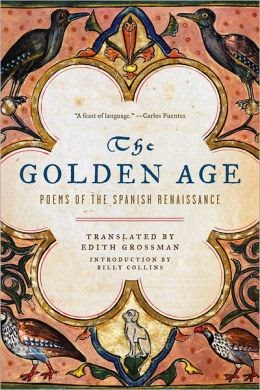
As luck would have it, almost all of the Manrique lines cited by Copi in this novel appear in this post here with an accompanying English translation from Edith Grossman.
*
As luck would have it, almost all of the Manrique lines cited by Copi in this novel appear in this post here with an accompanying English translation from Edith Grossman.



 Entradas


