jueves, 22 de mayo de 2014

A People's Tragedy Part One: Russia Under the Old Regime

A People's Tragedy: The Russian Revolution, 1891-1924 (Penguin Books, 1997)
by Orlando Figes
England, 1996

It's a measure of how satisfying A People's Tragedy is that my biggest complaint about this meaty read is actually rather insubstantial and petty: over the course of its 824 pages of text, Figes refers to Russia as a "backwards peasant" country often enough for me to have taken note of its repetitiveness as political shorthand.  That being said, it's not like I can take issue with the historian's use of the term because so much of Part One, "Russia Under the Old Regime," draws attention to the disconnect between the urban and the rural ways of life and to the extreme economic divide between the haves and the have-nots in the major cities and out in the provinces in the years leading up to the revolution.  A description of the income gap in the "typical provincial city" of Kishinev, for example, leads Figes to conclude that "these were the two faces of every Russian city: the one of imperial power and European civilization, the other of poverty and squalor of Asiatic proportions" (43).  An unduly harsh critique?  Maybe but only in the wording because in addition to the economic disparities, Figes also touches on the cultural polarities in the two Russias evident in terms of "how the intelligentsia - steeped in the culture of Western Europe - saw (with some disgust) the backward life of the Russian provinces" (43-44).  He draws from Chekhov's Three Sisters for a choice literary example of this mindset.  Later, he adds this too much information style nugget about Russia's equivalent of the culture wars:

It was still a common practice in some parts of Russia for a peasant bride to be deflowered before the whole village; and if the groom proved impotent, his place could be taken by an older man, or by the finger of the matchmaker.  Modesty had very little place in the peasant world.  Toilets were in the open air.  Peasant women were constantly baring their breasts, either to inspect and fondle them or to nurse their babies, while peasant men were quite unselfconscious about playing with their genitals.  Urban doctors were shocked by the peasant customs of spitting into a person's eye to get rid of sties, of feeding children mouth to mouth, and of calming baby boys by sucking on their penis (95).

Since it might be a bit of an anthropological tease to share a passage about peasant sex without a bookend one about peasant violence, it's fortunate that in the ensuing pages Figes has two long paragraphs about the particularly bloodthirsty nature of peasant violence in the Russian countryside: "Adulterous wives and horse-thieves suffered the most brutal punishments," he writes.  The latter, for example, "could be castrated, beaten, branded with hot irons, or hacked to death with sickles.  Other transgressors were known to have had their eyes pulled out, nails hammered into their body, legs and arms cut off, or stakes driven down their throat.  A favourite punishment was to raise the victim on a pulley with his feet and hands tied together and to drop him so that the vertebrae in his back were broken; this was repeated several times until he was reduced to a spineless sack" (96).  I'll stop there since I assume you get the sadistic picture, but what's the point of all this?  For Figes, at least a part of his examination is an attempt to understand whether a preexisting culture of violence or the revolution was to blame for the violence that went haywire once the revolution started:

It is difficult to say where this barbarism came from - whether it was the culture of the Russian peasants, or the harsh environment in which they lived.  During the revolution and civil war the peasantry developed even more gruesome forms of killing and torture.  They mutilated the bodies of their victims, cut off their heads and disgorged their internal organs.  Revolution and civil war are extreme situations, and there is no guarantee that anyone else, regardless of their nationality, would not act in a similar fashion given the same circumstances.  But it is surely right to ask, as Gorky did in his famous essay 'On the Russian Peasantry' (1922), whether in fact the revolution had not merely brought out, as he put it, 'the exceptional cruelty of the Russian people'?

The quote above is from page 96 and ends with the opinions that "this was a cruelty made by history": "the violence and cruelty which the old regime inflicted on the peasant was transformed into a peasant violence which not only disfigured daily village life, but which also rebounded against the regime in the terrible violence of the revolution."  Later on in A People's Tragedy, Figes will talk about both urban manifestations of violence--i.e. the exceptional cruelties in the city centers perpetrated by revolutionaries and reactionaries alike--and about how, once they'd made their grasp for power, the Bolsheviks needed peasant support to maintain the revolution but never really trusted the peasants as true ideological partners due to their urban biases.  But what's the rush, comrade?  On to the urban violence in the next post and, with any luck, a push to get to Part Two, "The Crisis of Authority (1891-1917)," before I lose my Russian Revolution edge.

martes, 20 de mayo de 2014

A People's Tragedy: The Russian Revolution, 1891-1924

A People's Tragedy: The Russian Revolution, 1891-1924 (Penguin Books, 1997)
by Orlando Figes
England, 1996

These days we call so many things a 'revolution' - a change in the government's policies on sport, a technological innovation, or even a new trend in marketing - that it may be hard for the reader of this book to take on board the vast scale of its subject at the start.  The Russian Revolution was, at least in terms of its effects, one of the biggest events in the history of the world.  Within a generation of the establishment of Soviet power, one-third of humanity was living under regimes modelled upon it.  The revolution of 1917 has defined the shape of the contemporary world, and we are only now emerging from its shadow.  It was not so much a single revolution - the compact eruption of 1917 so often depicted in the history books - as a whole complex of different revolutions which exploded in the middle of the First World War and set off a chain reaction of more revolutions, civil, ethic and national wars.  By the time that it was over, it had blown apart - and then put back together -an empire covering one-sixth of the surface of the globe.  At the risk of appearing callous, the easiest way to convey the revolution's scope is to list the ways in which it wasted human life: tens of thousands were killed by the bombs and bullets of the revolutionaries, and at least an equal number by the repressions of the tsarist regime, before 1917; thousands died in the street fighting of that year; hundreds of thousands from the Terror of the Reds - and an equal number from the Terror of the Whites, if one counts the victims of their pogroms against Jews - during the years that followed; more than a million perished in the fighting of the civil war, including civilians in the rear; and yet more people died from hunger, cold and disease than from all these put together.
(A People's Tragedy: The Russian Revolution, 1891-1924, xv)

To the unsuspecting reader confronted with then Cambridge lecturer and now University of London professor Orlando Figes' unexpected but somewhat blandly worded "apology for the vast size of this book," at 800-pages plus what Figes calls "the first attempt at a comprehensive history of the entire revolutionary period in a single volume" (xv), it will be understandable if the scope of the work rather than its narrative immediacy is what grabs your attention first.  It is indeed a heavy book in more than one way.   However, it didn't take long before I was in the grip of Figes' writing, his style in this terrific political and social history of his.  Chapter 1, "The Dynasty," offers up several quotable moments that give the lie to the notion that nonfiction writing is by nature more impersonal and/or drab than fiction writing.  On the anecdotal level alone, for example, you have your choice of highlights: a sneering Tsar Alexander III is quoted as saying that he "despised the bureaucracy and drank champagne to its obliteration" at one moment, and on the very same page Bertrand Russell is cited explaining "Bolshevik despotism" as somehow "the right sort of government for Russia" in these footnoted words to one Lady Ottoline Morrell: "If you ask yourself how Dostoevsky's characters should be governed, you will understand" (7).  Impeccable logic!  A passage on Tsarevich Alexis, the haemophiliac, occasions the comment that "haemophilia was so common in the royal houses of Europe that it had become something of an occupational hazard" (27), and another one on Rasputin, the Romanov spiritual adviser often accused of being a charlatan or a degenerate, inspires the remark that "his disgusting physical appearance merely added piquancy to his moral charms" (29). The liveliness of the writing aside, though, Figes is at his best doing the sort of subtle, sophisticated causal analysis that professional historians often don't get enough popular credit for:

The Romanov dynasty presented to the world a brilliant image of monarchical power and opulence during its tercentenary.  This was no simple propaganda exercise.  The rituals of homage to the dynasty and the glorification of its history were, to be sure, meant to inspire reverence and popular support for the principle of autocracy.  But their aim was also to reinvent the past, to recount the epic of the 'popular Tsar', so as to invest the monarchy with a mythical historical legitimacy and an image of enduring permanence at this anxious time when its right to rule was being challenged by Russia's emerging democracy.  The Romanovs were retreating to the past, hoping it would save them from the future (6).

"Retreating to the past, hoping it would save them from the future" is a great line not least because of the way the Romanovs' dynastic "tragedy" serves as a point of departure for the larger Russian tragedy or tragedies covered by Figes in this book.  On the beginning of the end for the dynasty and its supporters, he explains: "Instead of embracing reform they adhered obstinately to their own archaic vision of autocracy.  It was their tragedy that just as Russia was entering the twentieth century they were trying to return it to the seventeenth" (14).  A good stopping point?  Good enough for now.  In any event, more on Part One of A People's Tragedy, "Russia Under the Old Regime," before too long.

Orlando Figes

jueves, 8 de mayo de 2014

Spanish Lit Month 2014

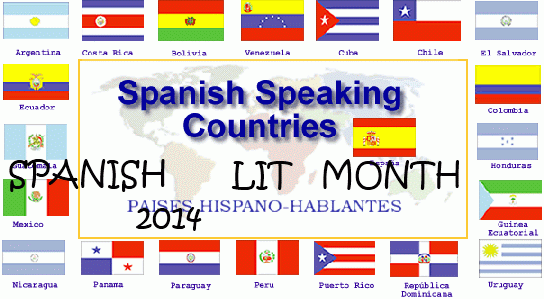
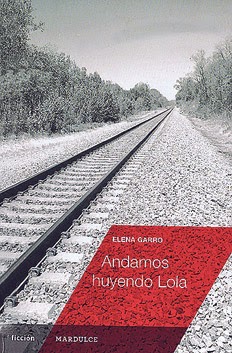
After a year off spent stockpiling new acquisitions and such, Stu of Winstonsdad's Blog and I have decided to host another edition of Spanish Language Literature Month in July 2014 under the catchy yet no nonsense moniker of Spanish Lit Month 2014.  Hope that you'll decide to join us.  For those new to the event, the basic idea is that those participating will read one or more works originally published in Spanish and contribute a review or reviews of what you've read so that other event participants can visit your site and leave comments, mash notes, etc.  Naturally, you may read the work(s) in Spanish or in translation depending on your language skills and interests.  Stu and I will do at least one monthly link round-up to facilitate discussions, but there will prob. be more frequent ones than that if the turnout is anywhere near as numerous and enthusiastic as it was in 2012.  Want to participate in the event but not sure what to read for it?  Check out Spanish critic Ignacio Echevarría's list of his idea of the essential books in Spanish-language literature since the 1950s here.  Or check out Semana.com's list of the 100 best Spanish-language novels of the last 25 years here.  Way too recent recommendations for someone of your snooty archival bent?  "Good literature needs to breathe a little after it's decanted" and all that?  Then how about 100+ More Reading Recommendations for Spanish Lit Month 2012, which provides three top U.S. universities' reading lists for the canonical works dating back to the medieval era in Spain and the colonial era in Latin America?  For those wanting a simpler choice, you can also choose one or both of our group read selections set to be discussed during the last week in July: Gabriel García Márquez's 1996 News of a Kidnapping [original title: Noticia de un secuestro] (Stu's pick)* or Guillermo Cabrera Infante's 1967 Tres tristes tigres [translated title: Three Trapped Tigers] (my pick).**  For my part, I'm also considering Mexican Elena Garro's 1980 Andamos huyendo Lola, whose "novel" in the form of 11 linked tales about two characters on the run is said to bear some similarities to Roberto Bolaño's Los detectives salvajes [The Savage Detectives], and--well, let's keep the other choices secret for now, eh?  You'll find out or not find out soon enough anyway.

*Stu plans a Gabriel García Márquez theme week for the last week in July as part of a  tribute to the late Colombian Nobel winner.  Details forthcoming.
**I'm happy to note that the Guillermo Cabrera Infante novel is being read in conjunction with Richard of Shea's Zibaldone, who is hosting a Javier Marías-inspired Kingdom of Redonda Readalong this year.


Probable Spanish Lit Month 2014 Lineup

sábado, 3 de mayo de 2014

Yo el Supremo [I the Supreme] Group Read

With the # of my own postponed or otherwise incomplete 2014 Caravana de recuerdos Ibero-American readalong selections piling up almost as quickly as I can schedule them these days (hey, I'm nothing if not consistent!), it's time to announce May's candidate for a short attention span-induced disaster in the form of Paraguayan Augusto Roa Bastos' 1974 Yo el Supremo [I the Supreme in the translation put out by the Dalkey Archive Press].  So why might you want to consider joining us for this famously thorny title centered on the figure of José Gaspar de Francia, the "Supreme Dictator" of Paraguay from 1816-1840?  1) Cuban novelist Alejo Carpentier lauded it as an "obra maestra" or masterpiece.  2) Reviewer Paul West, writing for the Washington Post Book World, called it "more Joycean than Cortázar's Hopscotch, every bit as volcanic and visionary as Lezama Lima's Paradiso or Osman Lins' Avolavara."  3) And for those of you who haven't yet been turned off by this cavalcade of names you hardly ever hear about in the twee, Ivy Compton-Burnett reading parts of the book blogosphere, noted critic Ignacio Echevarría included the novel on his list of the essential books in Spanish-language literature since the 1950s, claiming that Yo el Supremo was "una auténtica cumbre literaria" ["a true literary high water mark"] and an "obra maestra insuperada" ["unsurpassed masterpiece"] of the Latin American dictator novel for what fellow critic Ángel Rama described as its heady mixture of "historia, novela, confesión, ensayo sociológico, filosofía moral, biografía novelada, panfleto revolucionario, poema en prosa, debate sobre los límites de la literatura y cuestionamiento del sistema verbal" ["history, novel, confession, sociological essay, moral philosophy, revolutionary pamphlet, poem in prose, debate on the limits of literature and questioning of the verbal system"] (68 in Ignacio Echevarría's book).  4) "Questioning of the verbal system"?  Whatever!  Still,  Stu of Winstonsdad's Blog confirms that Roa Bastos' work is complex and "is told in many forms of literary devices...creating almost a collage effect" and Sarah of what we have here is a failure to communicate  adds that it's "a bizarrely great piece of writing."  OK, nuff said.  Discussion of Yo el Supremo and/or I the Supreme will take place at participating blogs somewhere around May 29th thru 31st--and probably a day or two later here in Caravanalandia.

Other Alleged Supremos

miércoles, 30 de abril de 2014

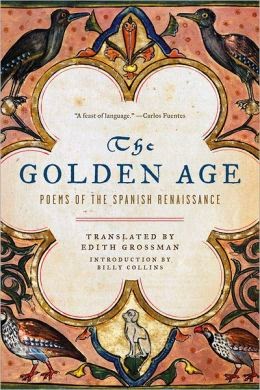
The Golden Age: Poems of the Spanish Renaissance #1: Jorge Manrique

The Golden Age: Poems of the Spanish Renaissance (W.W. Norton & Company, 2006)
Selected and translated from the Spanish by Edith Grossman
Spain and New Spain, a long time ago...

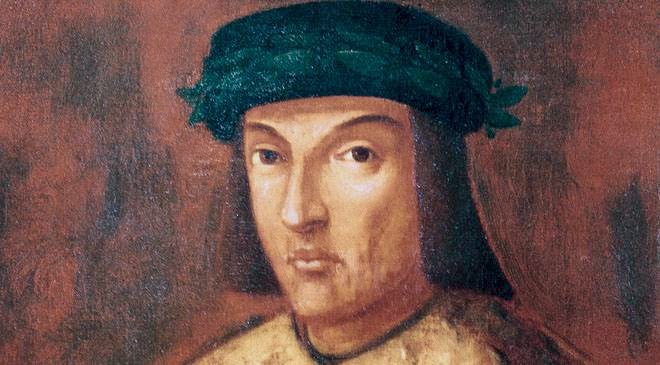
Jorge Manrique's affecting "Coplas que fizo por la muerte de su padre" [here translated as "Verses Written on the Death of His Father"] (Spain, 1476) doesn't seem like it should be as powerful as it actually is given its metrical simplicity and its apparent lack of verbal pyrotechnics, but it's a poem that did a number on me the first time I read it and a poem that continues to do the same whenever I have the occasion to revisit it.  Of course, the ubi sunt thing can always get to you if you're in a susceptible state of mind.  And Manrique does have at least one good trick up his sleeve for an elegy.  Anyway, to give you an idea of the tenor of the piece and of how Grossman translates the Spanish verse (Grossman: "The meter, called pie quebrado, or broken foot, consists of a fixed alternation of eight- and four-syllable lines in a twelve-line stanza, with a regular rhyme scheme" [1-2]), here's the opening stanza:

Recuerde el alma dormida,
avive el seso y despierte,
contemplando
cómo se passa la vida,
cómo se viene la muerte
tan callando;
cuán presto se va el plazer,
cómo después de acordado
da dolor,
cómo a nuestro parescer,
qualquiera tiempo passado
fué mejor.

 Let the dozing soul remember,
let the mind awake and revive
by contemplating
how our life goes by so swiftly
and how our death comes near
so silently;
how quickly pleasure fades,
and how when it is recalled
it gives us pain,
how we always seem to think
that times past must have been better
than today.

As I hope more than just poetry geeks can tell, Grossman's translation flows admirably in modern English even while mimicking Manrique's repetitions.  However, one example of the riches that can be lost in translation is that the sixth line that the translator renders as "so silently" is, to my mind, much more powerful in the 15th century Castilian: death is tan callando, or "so silencing," a present participle-aided statement of effect that might not translate as smoothly as "so silently" but which is probably more faithful to the vale of tears sorrow that the poet is seeking to evoke.

Elsewhere, Grossman does a marvelous and maybe even an uncanny job capturing Manrique's mood in English: "Our lives are the rivers/that empty into the sea/that is our dying," from the beginning of the third stanza, is a lovely translation of "Nuestras vidas son los ríos/que van a dar en el mar/que es el morir:" with its tricky third line [literally: "which is dying"], and her close to the ninth stanza's "The agility and speed,/the bodily strength and vigor/of one's youth,/they all turn heavy and dense/when entering the sullen precincts/of old age" is a clear winner even without Manrique's rhyming of "joventud" and "senectud" in the original's "Las mañas y ligereza/y la fuerça corporal/de joventud,/todo se torna graveza/quando llega al arrabal de senectud." As for that trick up Manrique's sleeve that I mentioned at the outset?  After using the ubi sunt theme as a prelude to a summary of his father's successes in life (being a friend to friends, an enemy to enemies, and--this being Reconquista Spain--naturally a slayer of Moors), Manrique has Death come knocking at his father's door just long enough to enjoin the caballero to seek eternal life through God rather than the life of this earth, which is fleeting.  The last stanza is the one that slays me, but it's a measure of the escalating power of the poem that this stanza, the third from the end, isn't so bad either.  The voice belong to Manrique's father:

--"No gastemos tiempo ya
en esta vida mezquina
por tal modo,
que mi voluntad está
conforme con la divina
para todo;
y consiento en mi morir
con voluntad plazentera
clara y pura,
que querer ombre vivir
quando Dios quiere que muera
es locura.

"Now let us spend no more time
on this miserable, this worthless
mortal life,
for in everything my will
conforms with the divine will,
the will of God;
and I consent to my dying
and submit to a desire
bright and pure;
it is madness for a man
to wish to live when God wishes
him to die."

Jorge Manrique (1440-1479)

I hope to write at least two more posts about this collection at some point.  In the meantime, please check out the posts below for more on the title.  The Manrique poem appears on pp. 1-37.

Amanda, Simpler Pastimes

Scott, seraillon

lunes, 7 de abril de 2014

La Misa de Amor


LA MISA DE AMOR

Mañanita de San Juan,
mañanita de primor,
cuando damas y galanes
van a oír misa mayor.
Allá va la mi señora,
entre todas la mejor;
viste saya sobre saya,
mantellín de tornasol,
camisa con oro y perlas
bordada en el cabezón.
En la su boca muy linda
lleva un poco de dulzor;
en la su cara tan blanca,
un poquito de arrebol,
y en los sus ojuelos garzos
lleva un poco de alcohol;
así entraba por la iglesia
relumbrando como sol.
Las damas mueren de envidia,
y los galanes de amor.
El que cantaba en el coro,
en el credo se perdió;
el abad que dice misa,
ha trocado la lición;
monacillos que le ayudan,
no aciertan responder, non,
por decir amén, amén,
decían amor, amor.

[THE MASS OF LOVE

Early in the morning on San Juan's,
early in the morning of beauty,
when young ladies and gentlemen
go to hear High Mass.
There goes my lady,
the best among them all,
wearing a two-piece skirt,
a mantilla with an iridescent sheen,
a blouse with gold and pearls
embroidered on the collar.
On her very beautiful mouth
she wears a little lipstick;
on her face so white,
a touch of rouge,
and about her big blue eyes,
a little eyeliner;
she entered the church like that,
dazzling like the sun.
The ladies are dying with envy,
the young gentlemen from love.
The singer in the choir
lost himself in the creed;
the abbot giving mass
got all mixed up during his sermon;
the altar boys who are there to help him don't manage to reply correctly, no,
for instead of saying "amen, amen,"
they were saying "amor, amor."]

Since Edith Grossman will be treating our April The Golden Age: Poems of the Spanish Renaissance group readers to a number of high end pro translations of some of the signature "learned" poetry from the Siglo de Oro era later in the month, I thought it might be worthwhile to offer up an amateur translation or two of some of the more popular romancero or songbook poetry being collected and published at the same time to balance things out somewhat.  A bad idea, I'm afraid--at the very least, I was quickly reminded of how insanely easy it is to wreak aesthetic destruction on even a simple poem just by attempting to provide a more or less literal translation of it without regard to rhyme or meter.  Ugh.  In any event, the anonymous romance "La Misa de Amor" ["The Mass of Love"] above--often presented as "La bella en misa" ["The Beauty at Mass"]--is one of the more frequently anthologized examples of romancero poetry that I've seen with lovely little variations available in Catalan, French, and Occitan as well as other ones in Spanish.  It's also supposedly a staple among the Sephardi Jewish community although I've yet to come across any translations of those variants that I can remember.  In this version, borrowed from Ramón Menéndez Pidal's Flor nueva de romances viejos, there's the usual playful interplay between the beauty of mass on a famous feast day such as San Juan's--the poem's "mañanita de primor" ["early in the morning of beauty"] in line 2--and the beauty at mass who disrupts the service by virtue of her show-stopping physical appearance.  Menéndez Pidal points out a further irony worth sharing here: the poem's composer gets so wrapped up in the "inocente irreverencia" ["innocent irreverence"] of the matter and in particular the detailed description of the beautiful lady's dress and make-up that "las gracias naturales de la hermosura" ["the natural graces of her beauty"] are almost completely forgotten (207)!  Note: the Spanish words I translated as "lipstick" and "eyeliner" could just as well have meant something more like "lip gloss" or "eye shadow" or whatever those 15th and 16th century Iberian Peninsula equivalents were.  It'd be nice if somebody from Elle or Ella España could step in and help a brother out with this.

Sources
"La Misa de Amor" appears on pp. 206-207 of Ramón Menéndez Pidal's Flor nueva de romances viejos (Madrid: Espasa, 2001) sans my primitive prose translation.  Menéndez Pidal defines the romance genre as "poemas épico-líricos breves que se cantan al son de un instrumento" ["brief epic/lyrical poems that are sung to the sound of an instrument"] (9), a convenient enough description for our purposes here and one which explains the obvious musicality of this poem when it's read in the original Spanish.  The image of the two juglares (French: jongleurs) is from an artist/work as yet unknown to me.

miércoles, 2 de abril de 2014

The Golden Age: Poems of the Spanish Renaissance Group Read

April's Caravana de recuerdos Ibero-American Readalong group read selection is the Edith Grossman-curated The Golden Age: Poems of the Spanish Renaissance, published by W.W. Norton & Company in 2007 with a facing page English translation of poems also appearing in their original Castilian, which presents an all-star lineup of Spain and New Spain verse talent from about the middle of the 15th century to the end of the 17th century: Jorge Manrique, Garcilaso de la Vega, Fray Luis de León, San Juan de la Cruz, Luis de Góngora, Lope de Vega, Francisco de Quevedo, and Sor Juana Inés de la Cruz.  Household names all, dig?  But if those names alone aren't enough to whet your poetic appetite to the point where you're practically salivating to join me for the group read, here's a juicy six year old post from our friend Tom of Wuthering Expectations in which he notes that "this is really an admirable book" and "my only actual complaint is that the book is much too short."  What he said!  Anyway, thanks to Tom for the push to add this collection to the syllabus for this year since it includes some of the most famous and the most dazzling Spanish poetry of the Siglo de Oro era, it's still in print and it's available for less than a $15 cover price in the U.S.  N.B. Those who'd like to read along with me should plan on coming back for the discussions somewhere around April 28th thru 30th; those who'd just like to see me fall on my face wrestling with a rare poetry offering in public can come back around the same time.  No harm either way.

Other Readers