martes, 14 de julio de 2020

The Professor and the Siren

"The Professor and the Siren"
by Giuseppe Tomasi di Lampedusa [translated from the Italian by Stephen Twilley]
Italy, 1961

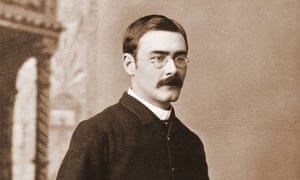
Since it's been a while since I've shared any short story posts here, I thought I'd celebrate my birthday week this year with a few words in honor of this posthumously published racconto by my near contemporary the great Sicilian writer Giuseppe Tomasi di Lampedusa (above, 1896-1957).  A meditation on the passing of time and the corruption of the flesh told in what eventually takes the form of a perfectly executed fable, "The Professor and the Siren" starts out as the account of a sort of odd couple friendship between a skirt-chasing young journalist and a crotchety 75-year old senator said to be "the most illustrious Hellenist of our time" (5).  Although the story's tone and a certain carnality to the prose initially struck me as somewhat jarring since they were so dissimilar to what I'd remembered of the elegiac The Leopard, I was amused by the Sicilian-centric humor--the senator: "Tell me about our island.  It's a lovely place, even if it is inhabited by donkeys" (10)--and by the "almost obscene metaphors" the classicist traffics in to describe the pleasure of dining on sea urchins: "They are the most beautiful thing you have down there, bloody and cartilaginous, the very image of the female sex, fragrant with salt and seaweed" (11).  About ten pages near the end, though, "The Professor and the Siren" takes an unexpected turn when the senator confides in the journalist his "adventure, an uncommon one" from the summer of 1887 in which he fished a Siren out of the sea.  I promise not to ruin things for you by saying any more about the ending, but this old man loved those final ten pages and the briny goodness of a piece of writing which sings of the frailty of human life and the natural wonders of "eternal Sicily" with such storytelling verve.  Lovely.

Source
"The Professor and the Siren" appears alongside two other short stories in the NYRB collection of the same name (New York: NYRB Classics, 2014, 1-38).

domingo, 12 de julio de 2020

Spanish Lit Month 2020: 7/5-7/11 Links

César Aira's El divorcio

Spanish Lit Month newcomers Fernando Contreras Castro and Miren Agur Meabe join SLM veterans César Aira, Andrés Neuman, Mario Vargas Llosa, Enrique Vila-Matas and Juan Pablo Villalobos in the most recent links to reviews for the event.  The participants list has been updated here, and questions can be directed to either me or Stu should you need any clarification about how to party with us book nerds.  Until then, see you next week with more Spanish-language literature chat.

Grant, 1streading's Blog
Death in the Andes by Mario Vargas Llosa
I Don't Expect Anyone to Believe Me by Juan Pablo Villalobos

Iliana, Bookgirl's Nightstand
Spanish Lit Month intro

John, The Modern Novel
El divorcio (The Divorce) by César Aira
Única mirando al mar (Única Looking at the Sea) by Fernando Contreras Castro

Marina Sofia, Finding Time to Write
Our Dead World by Liliana Colanzi 

Stu, Winstonsdad's Blog
Montano by Enrique Vila-Matas
A Glass Eye by Miren Agur Meabe
Fracture by Andrés Neuman

sábado, 11 de julio de 2020

Xala

Xala (Présence Africaine, 2010)
by Sembène Ousmane
Senegal, 1973

On the eve of his third marriage, the status-conscious El Hadji Abdou Kader Bèye would seem to have it all going on as far as 50-something Senegalese polygamists are concerned: a prestigious seat on the country's first African-led Chamber of Commerce, a chauffeur-driven Mercedes, a villa for each of his three lovely ladies.  Then, unable to perform on his wedding night despite having coveted the teenage N'Goné's body something fierce, things quickly fall apart for the beleaguered El Hadji as he realizes that somebody in his entourage has cursed him with the impotence-inducing affliction the xala.  While something of a trifle compared to either 1956's Le docker noir or 1960's Les bouts de bois de Dieu, Xala is enjoyable enough on its own merits and sports the novelist's usual penchant for acutely observed social commentary.  An added bonus: beyond the skewering of its grasping protagonist, an easy mark in regard to his symbolic function as "la synthèse de deux cultures.  Formation bourgeoise européenne, éducation féodale africaine" ["the synthesis of two cultures: bourgeois European training, feudal African education"] (12), the novel's satire is much more slippery on the related matter of "africanité" vs. "modernité."  For example, a doctor who knows of El Hadji's resort to so-called holy men and witch doctors in addition to men of science for help overcoming his impotence refers to Africa as "le règne de l'irrationnel" ["the kingdom of the irrational"] (82).  El Hadji himself, despite his Evian-sipping ways and French-wannabe standard of living, finds that "l'atavisme ancestral du fétichisme" ["the ancestral atavism of fetishism"] is reborn in him after a visit to a seet-katt or seer (95).  Ditto the question of polygamy and what it means to be part of a time share arrangement with one's husband--although the complaint of Oumi N'Doye, El Hadji's second wife, cuts to the chase re: her disappointment with their sex life: "Il faut être jeune et bon cavalier pour monter deux juments à la fois" ["You need to be young and a good horseman to mount two mares at a time"] (100).  Sembène Ousmane turned Xala into a film in 1975; I'd be interested in seeing it if the opportunity ever arises.

Sembène Ousmane (1923-2007)

domingo, 5 de julio de 2020

Spanish Lit Month 2020: 7/1-7/4 Links

Mariana Enriquez

With (partial) week 1 of Spanish Lit Month 2020 now in the rearview mirror, here are the links from 7/1 thru 7/4 that I know of.  Feel free to fill me in if I've missed any.  While I'm here, prompted by a question from Sebastián from Buenos Aires, I'd like to remind everybody that "Spanish Lit Month" is more properly "Spanish-Language Lit Month" in that any work originally written in Spanish and not just from Spain is "eligible" for inclusion in the event.  In addition, Stu and I usually will include the other major languages from Spain (Basque, Catalan, Galician) and Stu has OK'd Portuguese as an exception again this year.  He even snuck a French book in for his first SLM 2020 read last week*, ha ha, but he's the boss so don't expect similar bending of the rules from me unless appropriate bribes (beer, cookies, empanadas) accompany your requests.  Cheers.

Ali, heavenali
The Adventures of China Iron by Gabriela Cabezón Cámara

Grant, 1streading's Blog
Holiday Heart by Margarita García Robayo

Jacqui, JacquiWine's Journal
Who Among Us? by Mario Benedetti

Richard, Caravana de recuerdos
Nuestra parte de noche by Mariana Enriquez

Stu, Winstonsdad's Blog

sábado, 4 de julio de 2020

Nuestra parte de noche

Nuestra parte de noche (Anagrama, 2019)
por Mariana Enriquez
La Argentina, 2019

Juan Peterson es un médium para la Orden, una sociedad secreta que invoca a la Oscuridad en busca de la vida eterna.  Los ritos asociados con ponerse en contacto con los deidades del inframundo son sanguinarios, cuando menos, y la vida del médium tiende a ser de corta duración como resultado.  Juan, sospechando que está cerca de la muerte, decide salvar a su hijo Gaspar --su probable sucesor en el oficio-- desde el mismo destino por ocultar la aptitud del pibe para ser médium de los líderes de la Orden. Con esto como telón de fondo, Mariana Enriquez cuenta una historia que combina elementos de terror, de lo sobrenatural, con elementos de realismo crudo que tocan al llamado terrorismo de estado.  Transcurriendo entre los años 1981-1997 con un flashback a los años 1960-1976, Nuestra parte de noche es un lienzo grande pintado con urgencia y con gran atención al detalle.  Aunque la trama te engancha con sus varios giros y vueltas, hay una sutileza en la novela como se puede ver en la escena donde Gaspar, ya adulto, asiste a la inauguración de una muestra fotográfica.  Resulta que las fotos eran "de la Argentina durante su viaje de juventud por el interior en los últimos años de la dictadura", fotos tomadas al mismo tiempo que el viaje de Buenos Aires a Iguazú que hicieron Juan y Gaspar al comienzo de la novela.  "Las fotos, pensó Gaspar, eran bastante geniales.  Ninguna gritaba dictadura, represión ni muerte, pero la selección era inquietante" (597 & 599).  Por supuesto, lo mismo podría decirse de la novela misma.  Aunque Enriquez hace bien con el panorama general, también impresiona con sus pinceladas.  Había un par de páginas magistrales sobre el Mundial de 1986, por ejemplo, que me emocionó tanto que el famoso video clip del "gol de siglo" de Maradona relatado por Víctor Hugo Morales: "Eran campeones y era como volar, como si no existiese nada más que ese momento, un momento que era para siempre y que era alegre y tristísimo porque no podía durar.  Había que salir a la calle, no se podía estar solo.  Las calles estaban llenas de bocinas y muñecos enrulados del 10 y banderas y papelitos mire mire qué locura mire mire qué emoción cantaba la gente, algunos sacaron el teléfono a la calle para que sus familiares que vivían en otros países escuchasen los gritos, las borracheras, y lloraban desde allá, desde Canadá y Estados Unidos y Brasil y México y España y Francia, exiliados por la dictadura, trabajando lejos porque en Argentina nunca había trabajo, algunos habían visto el partido en bares, otros lo habían escuchado por radio, todos querían volver para estar ahí, incluso en algunas provincias donde llovía y festejaban empapados, las camisetas pegadas al cuerpo" (307).  En otra parte, la autora me hizo reír con esta observación de Gaspar sobre "la forma de hablar de los varones...especialmente el Negro y sus comparaciones futbolísticas.  Lo que dijo este tipo fue como un gol olímpíco de córner.  El infierno es ir ganando y que te den vuelta el partido en dos minutos" (545) y con este pasaje bolañesco sobre "el fragmento de un poema de Neruda" encontrado en un cuaderno.  "A Julieta le gustaba Neruda, leía poemas de amor y políticos, típico de ella.  Era un viejo de mierda, le decía, un pésimo tipo con las minas, pero qué poeta" (557).  Al mismo tiempo, la novela está llena de momentos inquietantes --la muerte de una niña que tiene lugar casi en cámara lenta y la que está televisada en vivo desde Colombia, un tal Dr. Bradford que solía decir que "los cuerpos enfermos eran su patria" (171), el hallazgo de cadáveres en una fosa común en Misiones-- y referencias más o menos oblicuas a los desaparecidos que se cruzan con la "otra realidad" alucinatoria de su mundo de fantasmas y brujería y "las flores negras que crecen en el cielo".  En resumen, un librazo.

Mariana Enriquez

miércoles, 1 de julio de 2020

Spanish Lit Month 2020


Spanish Lit Month 2020, as in previous years a two-month jobber running from the beginning of July through the end of August, is now in session.  Hope you'll be able to join us for a libro or two.  SLM guru Stu of Winstonsdad's Blog has written a welcome post here and another introductory post here with some participation/readalong ideas for those so inclined; loners, disaffected youth and others can also participate as easily as reading a measly one or more books in Spanish or in translation from Spanish and letting Stu or me know where to find your book (or movie or poem or short story or whatever) review(s).  I'll collect the links on Saturday each week starting either this weekend or next.  Having taken last year off from the event after having basically lost interest in blogging, I owe a special thanks to Stu for letting me return to the fold this year and I look forward to discussing some quality reading material with both Stu and the rest of you over the next couple of months.  Let's take a break from the real world if we can, shall we?

Spanish Lit Month 2020 Readers
Mandy Wight, peakreads
Marina Sofia, Finding Time to Write
Meredith, Dolce Bellezza
Paul, By the Firelight
Rise, in lieu of a field guide
Ron Restrepo, @drhr90 (Twitter)
Tom, Wuthering Expectations
Tony, Tony's Reading List

lunes, 30 de marzo de 2020

Kim

Kim (Oxford University Press, 2008)
by Rudyard Kipling
England, 1901

With fear and horror everywhere these days, I hope you'll forgive me this exercise in escapism.  Anyway, I read Kim recently and thoroughly enjoyed it.  The tale of Kimball "Kim" O'Hara, the son of an Irish soldier who's grown up native as an orphaned street urchin in Lahore, the novel follows our crafty young hero as he travels across creation with an elderly Tibetan lama, receives a British education at an elite boarding school described as a place where "precocious youths" would be sent for "generation [after] sallow-hued generation" (123), and is eventually lured into a prospective career with the Secret Service as a would be participant in the Great Game all while struggling to come to grips with his own identity.  Part bildungsroman, part travelogue, part adventure yarn, with just a hint of spy novel thrown into the mix, Kim moves at a brisk (if episodic) pace and manages to capture its title character's wide-eyed appreciation of and zest for the human pageantry on display in every nook and cranny of his journey.  In addition to touching on the appeal of both the active and the meditative life in highlighting the bond between the young Kim and the elderly lama--seekers both--Kipling connected with me emotionally by evoking some of the affection of a Don Quixote and Sancho Panza among other famous odd couples of fiction.  As far as the novelist's well-known "problematic" side, I didn't feel that was really in evidence here.  Instead, we're presented with the lesson that the "Sahib" Colonel Creighton imparts to Kim, warning him to eschew race and class prejudice and not to "at any time be led to contemn the black man...  There is no sin so great as ignorance.  Remember this" and the evidence that Kim himself buys into this open-minded worldview.  "And who are thy people, Friend of all the World?" the Afghan horse trader Mahbub Ali asks.  To which Kim replies, joking about a "little clay-walled room" but symbolizing the vast expanse of India before them, "This great and beautiful land" (119 & 136).  A sparkling story and just the tonic I needed.

Rudyard Kipling (1865-1936)