Mostrando las entradas con la etiqueta Roberto Arlt. Mostrar todas las entradas

domingo, 20 de septiembre de 2020

ARLT

 
"ARLT"
by César Aira
Argentina, 1993

An appreciation of Argentinean Literature of Doom great Roberto Arlt penned by fellow Argentinean Literature of Doom great César Aira?  Sort of!  While I'm not sure what prompted Aira (above, photographer unknown) to take up this possibly spurious exercise in literary criticism, he begins his essay with a definition of the methodologies of expressionism and impressionism which I won't go into here.  Arlt, "torturado y pensativo como un alemán" ["pensive and tortured like a German"] (55), is an expressionist, though--the "like a German" line supposedly owing itself to a quote of Goethe's on the nature of the Teutonic temperament.  Moving from the general to the specific, Aira then zeroes in on the theme of "la traición' ["treachery, betrayal"] (57) as an example of how Arlt's expressionist tendencies ooze to the surface in his work.  Although Aira cheekily calls this "a random but a central" example  ["uno cualquiera, pero central"], parenthetically adding that "la elección de ejemplos es una trampa que habría que evitar" ["the choice of examples is a trap that should be avoided"] (!) (57), one wonders why the choice of language is so slippery here given that betrayal and treachery are so foundational to Arlt's fiction.  One possible answer: "Cuando uno se pregunta por las intenciones de un artista, es inevitable que se pierda en un laberinto" ["When one wonders about the intentions of an artist, it's inevitable that one get lost in a labyrinth"] (59).  And another: slippery language is foundational to Aira's own obra.  Whatever one's opinions on Arlt's art, of course, one needn't be a fan of either writer to be amused and/or intrigued by Aira's essayistic antics and conclusions.  One of my favorites among the former comes in the paragraph which begins, "Suele decirse 'Arlt, nuestro Flaubert'" ["As the saying goes, 'Arlt, our Flaubert'"].  Although I've actually seen Arlt referred to by Argentines as "our Dostoevsky," I'd be surprised if Aira didn't make up the "our Flaubert" talk altogether.  It's a great set-up line, though, insofar as our critic goes on to hammer home the points that 1) "Creo que la aproximación es inepta, y no sólo por el abismo que hay entre un escritor maduro y burgués, y el adolescente visionario que fue Arlt...  Yo diría 'nuestro Lautréamont'" ["I believe the approximation is inept and not only because of the gulf that there is between a mature, bourgeois writer and the adolescent visionary that was Arlt...  I would say, 'our Lautréamont'"] and 2) "Lo que en la novela europea se hizo a lo largo de quinientos años y mil escritores, en la Argentina lo hizo Arlt solo, en cinco años" ["What in the European novel was done over the course of five hundred years and by one thousand writers was done in Argentina by Arlt alone in five years"] (63, ellipses added).  Aira, who hides his cards on the matter of how much he esteems Arlt as a stylist or not, loses his poker face when concluding that Arlt's sense of "lo novelesco" ["the novelesque"] has roots in "el folletín truculento" ["the grisly feuilleton"]--something in opposition to "la novela ideológica, la falsa novela" ["the ideological novel, the fake novel"] as practiced by a more conformist writer like Eduardo Mallea: "Es la diferencia entre el gentleman y el Monstruo" ["It's the difference between the gentleman and the Monster"] (62); when pointing out some of the paradoxes of Arlt's style ("Las novelas de Arlt son historias de la inmovilidad, novelas de las que no se sale, pero al mismo tiempo no se explican sino como novelas de viaje" ["Arlt's novels are stories of immobility, novels in which there's no exit, but at the same time can only be explained in terms of travel novels"]) (63); or when finding unexpected parallels between Arlt's suspension of time and sense of perspective and Marcel Duchamp's The Large Glass.  "Yo mismo, proponiéndome como ejemplo de la singularidad extenuada del tiempo, trepo a la cinta del continuo y corro tras el Monstruo revestido de la figura irrisoria de la explicación" ["I myself, setting out as an example of the exhausted singularity of time, step onto the treadmill of the continuum and chase after the Monster sheathed in the ridiculous figure of  explanation"], Aira writes, purportedly moved by "la introyección feliz de lo imaginario" ["the happy introjection of the imaginary"] and "la recepción del cine mudo de Arlt" ["the reception of Arlt's silent film"] technique, prey to images that dance before his eyes.  "Duchamp la llamó Perspectiva, yo la llamo Inspiración.  Salgo a buscarlas todos los días, en una rutina inmutable, a la perfecta transparencia de lo habitual, a las calles de mi barrio, que es el de Arlt, Flores, a los cafés de los alrededores de la plaza y la estación, donde voy todas las mañanas a escribir" ["Duchamp called it Perspective, I call it Inspiration.  I go out to search for them every day, in an unchanging routine, in the perfect transparency of the habitual, in the streets of my neighborhood, which is the same as Arlt's, Flores, at the cafés surrounding the plaza and the train station where I go every morning to write" (70-71).  Yes!

Source
"ARLT," written in 1991 and published in 1993, appears on pp. 55-71 of the Argentinean journal Paradoxa #7.  People wanting a full account of all the good stuff I had to leave out from it can find a PDF of the piece here.

domingo, 21 de diciembre de 2014

¿Existe la novela argentina?

"¿Existe la novela argentina?"
by Ricardo Piglia
Argentina, 1986

Let's say, to put it modestly, that [Roberto] Arlt is Jesus Christ.  Argentina is Israel, of course, and Buenos Aires is Jerusalem.  Arlt is born and lives a rather short life, dying at forty-two if I'm not mistaken...  But it wasn't the end of everything, because like Jesus Christ, Arlt had his St. Paul.  Arlt's St. Paul, the founder of his church, is Ricardo Piglia.  I often ask myself: what would have happened if Piglia, instead of falling in love with Arlt, had fallen in love with Gombrowicz?  Why didn't Piglia devote himself to spreading the Gombrowiczian good news...?
(Roberto Bolaño, "The Vagaries of the Literature of Doom," 97-98 [ellipses added])

Fun w/Argentinean Gombrowicz Criticism, Part I.  Long before Roberto Bolaño started riffing on the vagaries of the Argentinean Literature of Doom, fellow big deal novelist/longtime Caravana favorite/alleged St. Paul to Roberto Arlt's Jesus Christ Ricardo Piglia (photo above) took up the question "¿Existe la novela argentina?" ["Is There Such a Thing as the Argentinean Novel?"] to propose a pre-Doom Argentinean long form canon of sorts centered on the works of Roberto Arlt, Macedonio Fernández, and--apparently unbeknownst to our good friend Bolaño--a wacky Polish party crasher by the name of Witold Gombrowicz.  In any event, the seven pillars of wisdom buttressing Piglia's action-packed 1986 essay go something like this.  1) Gombrowicz's 1953 novel Trans-Atlantyk, written in Polish a little more than halfway through the writer's World War II-prompted 24-year stay in Argentina and only later translated into the Spanish of his country of refuge as Transatlántico, is "una de las mejores novelas escritas en este país" ["one of the best novels written in this country"] (35).  Beyond its artistic qualities, though, Trans-Atlantyk poses fundamental questions about identity--in particular, "¿Qué pasa cuando uno pertenece a una cultura secundaria? ¿Qué pasa cuando uno escribe en una lengua marginal?" ["What happens when one belongs to a culture of lesser importance?  What happens when one writes in a non-mainstream language?"]--to which Gombrowicz would return again in his nonfiction Diary.  For Piglia, Argentinean culture thus inadvertently provided the rascally Polish writer who sometimes pretended to be a count with a living laboratory in which to put his art-and-exile hypotheses to the test while living in a South American nation "of lesser importance" in terms of the country's cultural presence on the world stage (36).  2) In terms of Gombrowicz's points of contact with the Argentinean literary tradition, on the other hand, Piglia reminds us that one of the main thrusts of Jorge Luis Borges' 1932 essay "El escritor argentino y la tradición" ["The Argentine Writer and Tradition"] bears a striking similarity to some of the Polish author's concerns as far as Borges' highlighting of the manner in which so-called "literaturas secundarias y marginales" ["minor and non-mainstream literatures"], due to the very fact that they are "desplazadas de las grandes corrientes europeas...de las grandes tradiciones" ["displaced from the great European currents...from the grand traditions"], actually afford what Borges deems the advantage of an "irreverente" ["irreverent"], liberating free hand in the sense that the so-called inferior tradition isn't tethered to the dominant tradition (Ibid., ellipses added).  Of course, whether that isn't really always true for iconoclasts by definition is another question for el señor Borges.  Still,  "para Borges (como para Gombrowicz)" ["for Borges (as for Gombrowicz)"], the essayist adds, "este lugar incierto permite un uso específico de la herencia cultural: los mecanismos de falsificación, la tentación del robo, la traducción como plagio, la mezcla, la combinación de registros, el entrevero de filiaciones.  Ésa sería la tradición argentina" ["this no man's land invites a specific use of one's cultural patrimony: in the process of falsification; the invitation to robbery; translation as plagiarism; the blending, the combination of registers; the mash-up of lines of descent.  That would be the Argentinean tradition"] (Ibid.).  3)  Had I not read the hysterical Borges- and Adolfo Bioy Casares-penned Crónicas de Bustos Domecq [Chronicles of Bustos Domecq] over the summer, I might have found that last bit a little over the top on Piglia's part.  However, that slender volume of spurious criticism alone corroborates everything the man's just said!  Piglia takes an unexpected critical detour at this point, though, to ask what would have happened if Gombrowicz had written Trans-Atlantyk in Spanish instead of in his native Polish.  That is, would the great "Gombro" have been able to pull off a master stylist act in a foreign language like Joseph Conrad did or would the results have been something more like the infamously rough-hewn Spanish of Roberto Arlt, who was born in Buenos Aires but grew up in a German-speaking home courtesy of first generation immigrant parents from Germany and Italy?  Piglia understandably supposes the latter, but the explanation he gives hints at the increasingly language-obsessed direction of the remainder of his piece: "Alguien que quiso denigrarlo dijo que Arlt hablaba el lunfardo con acento extranjero.  Ésa es una excelente definición del efecto que produce su estilo.  Y sirve también para imaginar lo que pudo haber sido el español de Gombrowicz: esa mezcla rara de formas populares y acento eslavo" ["Somebody who wanted to denigrate him said that Arlt spoke lunfardo with a foreign accent. That is an excellent description of the effect that his style produces.  And it also helps us imagine what Gombrowicz's Spanish could have been like: that strange mix of colloquialisms and a Slavic accent"] (37).  4) While "Arlt's St. Paul" acknowledges the truth behind the saying that "vivir en otra lengua" ["living in another language"] as practiced by the likes of Conrad, Jerzy Kosinski, Nabokov, Beckett and Isak Dinesen among others ''es la experiencia de la novela moderna" ["is the experience of the modern novel"], he emphasizes the point that Polish was a language that Gombrowicz "usaba casi exclusivamente en la escritura, como si fuera un idiolecto, una lengua privada" ["used almost exclusively in writing, as if it were an idiolect, a private language"] in his day to day life in Argentina (Ibid.)  Because of that, Gombrowicz's Trans-Atlantyk, the first novel which he wrote in exile, "establece un pacto extremo con la lengua polaca" ["establishes an extreme covenant with the Polish language"].  How so?  "La novela es casi intraducible, como sucede siempre que un artista está lejos de su lengua y mantiene con ella una relación excesiva donde se mezclan el odio y la nostalgia" ["The novel is almost untranslatable, as always happens when an artist is far removed from his native tongue and maintains an excessive relationship with it in which hate and nostalgia freely mingle"].  That debatable point notwithstanding, Piglia's conclusion to this section was very arresting to this Argentinean Literature of Doomophile:  "Digo esto" ["I say this"], he explains, "porque me parece que la extrañeza es la marca de los dos grandes estilos que se han producido en la novela argentina del siglo xx: el de Roberto Arlt y el de Macedonio Fernández.  Parecen lenguas exiliadas: suenan como el español de Gombrowicz" ["because it seems to me that strangeness is the hallmark of the two great styles that have been produced in the 20th century Argentinean novel: Roberto Arlt's and Macedonio Fernández's"] (Ibid.).  5)  Naturally, all this talk of language and "strangeness" leads Piglia like a ping pong ball back to Borges and his "preciso y claro, casi perfecto" ["precise and clear, almost perfect"] Spanish (Ibid.).  In a digression that should be of great interest to translation geeks in general and to Borges geeks in particular, Piglia notes that Borges himself admits to having been greatly indebted to Paul Groussac--another European turned Rio de la Plata expat who, unlike Gombrowicz, abandoned his native tongue and went on to help define the norms of early Argentinean literary style along with people like Leopoldo Lugones.  Piglia: "En este sentido hay que decir que nuestro Conrad es Groussac" ["In this sense, we have to say that our Conrad is Groussac"].  And: "Allí busca Borges los origines 'argentinos' de su estilo" ["That's where Borges searches for the 'Argentinean' origins of his style"] (38).  To add to the irony of a French-born transplant like Groussac being a forerunner of Borges' in matters of Spanish language style, Piglia suggests that Borges himself might have constructed his style out of a misplaced relationship with his mother tongue.  Citing an anecdote which is very amusing but maybe not entirely reliable from a factual standpoint, Piglia shares the story about how the first book Borges supposedly read in his life was a translation of Don Quixote in English.  Borges: "Cuando lo leí en el original pensé que era una mala traducción" ["When I read it in the original Spanish, I thought that it was a bad translation"]!  Remarking that this anecdote reveals the mind of the prankster behind the great short story "Pierre Menard, Author of the Quixote," Piglia opines that when Borges eventually resolved the dilemma of how to write with the precision of English but the rhythms and tones of the Spanish of his everyday life, he was well on his way to developing one of the best prose styles in the language since Francisco de Quevedo (38).  6)  The 1947 "traducción argentina" ["Argentinean translation"] of Gombrowicz's 1937 novel Ferdydurke is the next item on the agenda, and like the preceding one it's a fairly awesome one indeed for a language freak.  Piglia begins by saying that the translation was one of the most "extravagantes" ["extravagant"] and "significativas" ["significant"] literary experiences he's aware of (39).  Although this sounds like a generous dollop of typical academic rhetorical overkill, anybody who's familiar with Gombrowicz's endearing penchant for referring to himself as "yo, Gombrowicz" ["I, Gombrowicz"] as if he were a character of his own creation won't doubt the "extravagant" part at all!  More to the point, in this case the translation endeavor just might have lived up to Piglia's hype inasmuch as the process entailed Gombrowicz creating a first draft of the novel by translating the original Polish into an "inesperado" ["unexpected"] and "casi onírico" ["almost dreamlike"] Spanish, and then arranging to have a team of native Spanish speakers working under the direction of the Cuban Virgilio Piñera hammer out the final version with the assistance of a veritable soccer team of others.  Who were these unnamed assistants?  "Los parroquianos y los jugadores de ajedrez y de codillo que frecuentaban la confitería Rex y que aportaban sus opiniones lingüísticas cuando las discusiones subían demasiado de tono" ["The regulars and the chess players and the codillo-playing card sharps who frequented the confitería Rex café/pastry shop and who chimed in with their own linguistic opinions whenever the discussions would get too heated"].  Piglia explains that "este equipo no conocía el polaco y los debates se trasladan a menudo al francés, lengua a la Gombrowicz y Piñera se cruzaban cuando el español ya no admitía nuevas torsiones" ["this team didn't know Polish and the debates were often carried over into French, a language where Gombrowicz and Piñera would find common ground when Spanish no longer accommodated new contortions"].  The result?  Gombrowicz essentially rewrote Ferdydurke in its entirety for the Argentinean translation, employing a blend of "Cuban," French, Polish, and "Argentinean" to form a new "materia viva" ["living/organic matter"] (Ibid.).  Piglia calls this mutation "uno de los textos más singulares de nuestra literatura" ["one of the most singular texts in our literature"], the "our" part stemming from the fact that "antes que nada hay que decir que es una mala traducción en el sentido en que Borges hablaba así de la lengua de Cervantes" ["first of all, it has to be said that it's a bad translation in the same sense in which Borges was talking about Cervantes' language"] and--more to the point, that little piece of mischievousness aside--secondly, that "en la versión argentina de Ferdydurke el español está forzado casi hasta la ruptura, crispado y artificial, parece una lengua futura.  Suena en realidad como una combinacion (una cruza) de los estilos de Roberto Arlt y de Macedonio Fernández" ["in the Argentinean version of Ferdydurke, the Spanish is strained almost to the breaking point; contorted and artificial, it seems like a future language.  It sounds, in reality, like a combination (a hybrid) of the styles of Roberto Arlt and of Macedonio Fernández"] (40).  7)  In the final page or two of the essay, "the founder of [Arlt's] church" prepares to seal the deal literary history-wise with the twin declarations that he believes the Argentinean translation of Ferdydurke to have merged with "las líneas centrales de la novela argentina contemporánea" ["the main currents of the contemporary Argentinean novel"] over time and that Gombrowicz himself probably deserves credit for having been "uno de los primeros" ["one of the first people"] in the country to pave the way for a reading of Arlt and Macedonio that legitimized them rather than disavowed them for their nonconformity.  Gombrowicz himself might have disdained such credit; after all, the well known provocateur famously lashed out at snobbish Argentinean literati with the accusation that "éste es un país donde el canillita que vocea la revista literaria de la élite refinada tiene más estilo que todos los redactores de esa misma revista" ["this is a country where the newspaper and magazine peddlers who shout out the names of the literary magazines of the elite have more style than all the contributors to that same rag"]!  That being said, Piglia notes that Macedonio was the first person to publish Gombrowicz in Spanish in his magazine Los papeles de Buenos Aires.  Did the two ever actually meet?  Probably not according to Piglia because "en aquellos años los dos vivían aislados, en pobrísimas piezas de pensión, seguros de su valor pero indecisos sobre el futuro de sus obras" ["in those years, the two lived isolated lives, in the poorest of boarding house rooms, confident about their worth as writers and yet undecided about the posterity of their works"] (40-41).  Which is a shame not least because "en más de uno sentido eran, el uno para el otro, el único lector posible" ["in more than one sense, each was the only possible reader for the other"].  In any case, "Arlt, Macedonio, Gombrowicz," writes the man Bolaño somewhat jokingly took to task for failing to spread "the Gombrowiczian good news."  "La novela argentina se construye en esos cruces (pero también con otras intrigas).  La novela argentina sería una novela polaca: quiero decir una novela polaca traducida a un español futuro, en un café de Buenos Aires, por una banda de conspiradores liderados por un conde apócrifo. Toda verdadera tradición es clandestina y se construye retrospectivamente y tiene la forma de un complot" ["The Argentinean novel is constructed out of those intersections (but also with other intrigues).  The Argentinean novel would be a Polish novel: by which I mean a Polish novel translated into a future Spanish, in a Buenos Aires café, by a band of conspirators led by a fake count.  All true tradition is clandestine and is constructed retrospectively and has all the attributes of a conspiracy"] (41).

Sources
  • Roberto Bolaño's 2002 speech on "Derivas de la pesada," translated by Natasha Wimmer as "The Vagaries of the Literature of Doom," appears in The Hudson Review LXIV, no. 1 (2011): 95-101, and can also be found in Bolaño's Between Parentheses.  The Arlt/Piglia stuff in particular is classic Bolaño.
  • Ricardo Piglia's "¿Existe la novela argentina?"--based on his 1982 participation in a conference on the Argentinean novel held at the Universidad Nacional del Litoral in Santa Fe, Argentina--appears on pp. 35-41 of his volume Crítica y ficción (Buenos Aires: Seix Barral, 2000).  A more recent edition of the book retitles the essay as "La novela polaca" ["The Polish Novel"] for reasons unknown.  Whatever, an inspiring storyteller/critic.

viernes, 31 de enero de 2014

The 2014 Caravana de recuerdos Ibero-American Readalong: January Links

Thanks in large part to the first half of our 2666 group read, which is in full effect in NWA-speak, the 2014 Caravana de recuerdos Ibero-American Readalong got off to a running start despite my own beginning of the year reading torpor.  Here are the links from the bomb ass bloggers who joined me in taking a turn at the mike this month.

Bellezza, Dolce Bellezza

Richard, Caravana de recuerdos
Las Hortensias by Felisberto Hernández
2666 by Roberto Bolaño

Rise, in lieu of a field guide

Sarah, what we have here is a failure to communicate

Images: Roberto Arlt en français! 
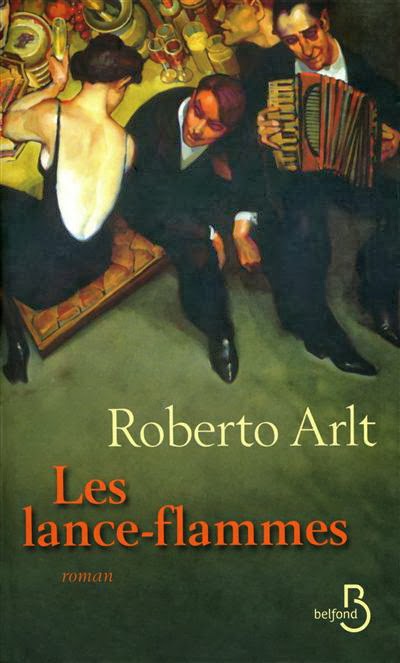
Bitchin' covers of Les sept fous [original title: Los siete locos; English title: The Seven Madmen] and Les lance-flammes [original title: Los lanzallamas; English title: _____ ] become even more bitchin' when you stop to consider that the latter novel has yet to make it into English after 80+ years.  English language publishers, tsk, tsk.

lunes, 8 de julio de 2013

Vida de monstruos. Espacio, violencia y ficción en la obra de Roberto Arlt

Vida de monstruos.  Espacio, violencia y ficción en la obra de Roberto Arlt (Contratiempo Ediciones, 2010)
por Zenda Liendivit
Argentina, 2010

Un ensayo académico, escrito por una arquitecta e investigadora independiente anteriormente afiliada con la Universidad de Buenos Aires, sobre la función del espacio en la obra de ese malandra Roberto Arlt.  Aunque Vida de monstruos por cierto no es un buen sustituto de la lectura de Arlt, sí es muy útil como una aproximación al estudio del espacio urbano en la obra del escritor.  Me gustó, por ejemplo, cómo Liendivit describe Arlt como un novelista que "actúa como un detective en busca de pistas para rearmar la escena de un crimen que se cometió con anterioridad pero que, sin embargo, no tiene del todo el signo negativo.  El crimen es, por supuesto, la propia Buenos Aires, y en extensión, la metrópolis moderna" (33).  También me gustó cómo la autora situa a Arlt dentro de una Buenos Aires que "es crimen, verdugo y víctima" a la vez (34) por medio de su propia escritura; conozco las novelas y un puñal de los cuentos de Arlt, por supuesto, pero esta cita de una de sus Aguafuertes porteñas ("Existe la sociedad") para mí fue nueva (47):

Yo creo que la sociedad o "nuestra sociedad" (la de ellos, no la mía) existe para los que creen en ella.  Pasa con esto lo mismo que con aquellos sujetos que toman cocaína.  En cuanto probaron ese alcaloide, dicen con el tono más lleno de suficiencia que puede conocerse:
-Hoy todo el mundo toma cocaína.
Y todo el mundo, como es natural, son ellos y cuatro gatos.

Dado que Vida de monstruos es un trabajo brevísimo, supongo que yo hubiera preferido ver más datos sobre el panorama histórico porteño en aquel entonces y menos énfasis sobre los estudios de la ciudad tomado de la perspectiva de la literatura comparada.  O eso o más tiempo con los escritores argentinos.  ¿Por qué?  Aunque entiendo la importancia conceptual de un paralelo entre la Baires moderna de Arlt y la Berlin moderna de Döblin, a mí me parece que Liendivit luce más cuando versa con los porteños.  No sabía, por ejemplo, que Ezequiel Martinez Estrada había aseverado "que no hay posibilidades de un Baudelaire o de un Whitman, en Buenos Aires" porque "la ciudad...es destructora de poesía" (111).  Además, me encantaron las comparaciones de Arlt con Borges a lo largo de la obra.  Aquí se puede ver una sobre el uso del lenguaje y el actitud de ambos escritores hacia "la literatura official" (53):

Con el recurso de Babel, [Arlt] confunde al idioma, lo mezcla, lo subvierte, lo vuelve indócil y extranjero para los antiguos proprietarios mientras recluta nuevos fieles que como él, desconocen patria, linajes y herencias.  Así como el lunfardo construye a su manera el mundo carcelario, con sus códigos, complicidades y exclusiones, el cocoliche, la mixtura de voces extranjeras con el español antiguo y el lenguaje aportado por la técnica así como la mala sintaxis fundan una Buenos Aires definitivamente singular y sobre todo intraducible.  Arlt realiza el proceso inverso de Borges (que escribe bien, para ser traducido, leído y comprendido afuera), interrumpiendo la conexión que aspira la modernidad y singularizando lo que está destinado a la normalización, o a la universalización.  Arlt no busca le reproductibilidad de su obra, porque esto lo convertiría en aquello que ataca, sino que ésta impacte, como las bombas de su admirado Di Giovanni, en las vidas de sus víctimas-aliados para despertarlos del letargo, de cierta idea de destino prefijado que él lucha por esquivar a fuerza precisamente de demoliciones y subversiones (54-55).

Si uno esté de acuerdo con Liendivit sobre este punto o no, lo interesante acerca de la comparación es cómo nos recuerda de la particularidad de Buenos Aires como zona de transición en la vida temprana de Arlt y Borges.  Una metrópolis en vías de formarse sí.  Pero también una ciudad donde los extranjeros "representaban casi el 50% de la población total de Buenos Aires a mediados del década del '10", según nos dice la autora, y "no sólo portaban costumbres e ideas extrañas sino, y principalmente, constituían peligro de contaminación lingüística" (51).  Si el lenguaje es el poder y la obra de Arlt claramente rechaza el idioma "oficial" y la supuesta alta cultura de su ciudad natal, qué ironía que aquello "peligro", en la forma de un hijo de inmigrantes llamado Roberto Arlt, un día sería el sujeto de un ensayo como lo de Liendivit.  ¡Vamos, una sonrisa!

Zenda Liendivit

jueves, 5 de julio de 2012

Ester Primavera

"Ester Primavera"
by Roberto Arlt
Argentina, 1933

Arlt, "our Dostoevsky" according to some argentinos and a guy who couldn't write his way out of a paper bag according to some effete others, can be introduced to Spanish Lit Month readers here, much more dispassionately, as the man who hit the degenerate trifecta in 1926, 1929 and 1931 with his crude, street smart jackpots El juguete rabioso [Mad Toy], Los siete locos [The Seven Madmen], and Los lanzallamas--all recommended.  "Ester Primavera" ["Esther Primavera," unavailable in English as far as I'm aware] is one of the better short stories I've read by him to date, by which I mean that most other book bloggers would probably hate the work.  You, on the other hand, you just might like it.  A character study of a Buenos Aires underworld type spending his last days in a tuberculosis sanatorium far away from the great metropolis somewhere out in the mountains, the story finds the narrator obsessing over the essentially unprovoked horrible wrong he once perpetrated on the young Ester Primavera.  In typically uncomfortable Arlt fashion, the narrator isn't really apologetic for ruining the title character's life but he can't seem to get her out of his thoughts either.  While Arlt plays with some more or less conventional contrasts between the dying lowlife in the mountain retreat and the innocent young woman in the big city, what really makes the story work from a strictly storytelling point of view is the unconventional delight he takes in underscoring the parallels between the physical and the psychological sickness of the narrator and his criminal companions.  After a scene in which one character smiles happily because he has just had a prolonged coughing fit but can find no signs of blood on his handkerchief, for example, the narrator dryly notes, "Ésa es la obsesión nuestra.  Y siempre nos consultamos" ["That's our obsession.  And we always consult each other"] (313).  Two paragraphs later, the reader will discover what "Physician, heal thyself" means to Arlt's doomed lungers in what I think is probably as optimistic a note as any to close on:

 Hasta hacemos apuestas, sí, apuestas sobre los que están moribundos en las salas.  Se juegan paquetes de cigarillos para ver quién acierta la hora en que morirá uno que agoniza.  Juego complicado y terrible, ya que a veces el moribundo no se muere, sino que "reacciona", entra en la convalecencia, se cura de la enfermedad y a su vez comienza a burlarse de los jugadores, y a entusiasmarse hasta el punta de buscar irónicamente otro "candidato" sobre quien apostar.

[We even place bets, yes, bets, on the people who are dying in the wards.  Cigarette packs are wagered to see who can guess the hour of death of somebody who's in agony.  A complicated and terrible game because sometimes the dying person doesn't die but instead "reacts," enters into convalescence, rids himself of the illness, and in turn begins to make fun of the gamblers and to work himself up to the point of ironically seeking out another "candidate" to place a bet on.]


Source
"Esther Primavera" can be found in El jorobadito, a 1933 short story collection by Arlt.  However, I read the story in Arlt fundamental (Buenos Aires: Alfaguara, 2010, 303-317), which has selected writings chosen by Analía Capdevila and edited with a prologue and notes by Ana Silvia Galán, in part because I love that cover!

More Arlt-related posts here on Caravana de recuerdos

Three snazzy Arlt-related posts written by Amateur Reader (Tom) over at Wuthering Expectations

martes, 21 de febrero de 2012

El escritor en el bosque de ladrillos. Una biografía de Roberto Arlt

El escritor en el bosque de ladrillos.  Una biografía de Roberto Arlt (Debolsillo, 2008)
por Sylvia Saítta
Argentina, 2000

Sylvia Saítta, profesora de Literatura Argentina del Siglo XX en la Universidad de Buenos Aires y la autora de aun más obras sobre el entorno cultural bonaerense que me gustaría leer en algún momento, nos ha regalado un trabajo de gran valor en El escritor en el bosque de ladrillos: una biografía mesurada, de confianza, y estudiosa sobre el controvertido autor de Los siete locos.  Si la biografía de Saítta es hasta cierto punto carente de anecdótas alocadas acerca de la vida personal de su sujeto, en su lugar la obra profundiza en algo más importante: el sentido en que el novelista, dramaturgo y periodista Arlt se retrató como un hijo de sus propias obras y un escritor de las calles mediante su escritura estilo "cross" a la mandíbula.  Como de costumbre en materias arltianas, me gustó saber algo de las rupturas estéticas entre Arlt y Borges.  Saítta, por ejemplo, comparte las anécdotas de cada escritor en cuanto a la creación de sus primeras obras publicadas y nos deja con esta observación llamativa acerca de "la muy precisa y nada romántica vinculación entre literatura y dinero" de Arlt:

  En este sentido, se diferencia notablemente de Jorge Luis Borges quien confiesa que, cuando en 1923 publicó su primer libro Fervor de Buenos Aires, no sólo pagó trescientos pesos por la edición sino que no se le ocurrió llevar ni un solo ejemplar a las librerías ni a los diarios, y recuerda que Arturo Cancela negaba que sus libros se vendieran mucho porque 'si los otros escritores se enteraban de eso pensarían que sus libros estaban escritos para el vulgo y que no tendrían ningún valor'.  Para Arlt, en cambio, escribir es hacerse pagar, y el dinero, como señala Ricardo Piglia, aparece como la garantía que hace posible la apropriación y el acceso a la literatura" (21-22).

Además de estos asuntos literarios más o menos esperados, a mí también me gustó la inesperada complejidad psicológica de la obra en general.  Dos anécdotas relacionadas con el viaje a Sevilla de Arlt en el año de 1935 serán suficientes para apreciar el sabor de esto.  En la primera, Saítta llama la atención a cómo el periodista de El Mundo sufrió "tres emociones violentas y inolvidables" (en las palabras de Arlt) al "tener en sus manos una carta original de Miguel de Cervantes Saavedra dirigida al rey, contemplar el retrato de Hernán Cortés y leer las cartas de Cristóbal Colón.  Con el material recopilado, escribe una nota de divulgacion para la revista El Hogar" (198).  En la segunda, Saíta hace hincapié en las calidades de Arlt como una especie de canalla entre canallas cuando describe cómo el cronista superó las protestas de unas gitana al ser fotografiadas: al confesar que "soy ladrón", el estafador bonachón Arlt ganó la partida y las gitanas "se dejaron retratar gratis" (198).  Quizá a causa del éxito de Saítta en lo que refiere a presentarnos un Arlt de carne y hueso en vez de un Arlt del mito, tengo que decir que era más y más difícil leer de los años últimos de Arlt y de cómo su desesperación económica se había "casi convertido en un personaje de sus propias ficciones" con su entusiasma para inventar medias eternas y cosas por el estilo (289).  En un epílogo conmovedor, la biógrafa sostiene que la última mujer de Arlt, entrevistada por el libro por Saítta, podía entender los sentimientos encontrados provocados por la vida del grosso ríoplatense: "Con mi marido me peleaba eternamente, y sin embargo pienso en él todas los días" (299).  (Debolsillo)

Sylvia Saítta

Perdiendo tiempo en línea hace poco, descubrí este enlace al programa de la materia para la asignatura de Literatura Argentina II enseñada por Sylvia Saítta en la UBA en 2011.  ¡Qué enloquecimiento genial! Por supuesto, este programa va a ayudarme mucho en lo venidero.

domingo, 11 de julio de 2010

Los lanzallamas

Los lanzallamas (Tolemia, 2008)
por Roberto Arlt
Argentina, 1931

Los lanzallamas, la continuación a Los siete locos, de Arlt, es aun más duro e inexorable que su predecesor.  Aunque el deterioro de Remo Erdosain, el protagonista de la novela cada vez más angustiado y trastornado, sigue ser el centro de atención de la obra, esta mitad del díptico trae al primer plano los otros locos y monstruos que pertenecen a "la terrible banda de Temperley" (229).  Además de Erdosain, un primer plano se da al Astrólogo, el líder castrado del grupo, que predica un evangelio de violencia mesiánica: "Ahora hay que predicar el odio y el exterminio, la disolución y la violencia.  El que habla de amor y respeto vendrá después" (20).  Lo siguiente es Haffner, también conocido como el Rufián Melancólico, un macró violente cuyos planes para un nuevo futuro vascilan entre lo de huír a Brasil y lo de convertirse en un segundo Al Capone.  Por su parte, la prostituta coja Hipólita sueña despierta en la imagen de Jesús como proxeneta ("Jesús no tenía pinta de 'cafishio'.  Lo seguían todas las mujeres.  Él la hubiera podido hacer 'trabajar' a la Magdalena" [82]) y, después de tales blasfemias, se reí a la idea de compartir sus pensamientos con una asamblea de mujeres devotas.  Algo que me fascina es que mientras que Arlt no juzga a estos desagradables personajes suyos, él  nunca se aleja asustado de darnos un retrato completo de ellos en lo que refiere a su sordidez tampoco.  En una pensión de bajísima categoría, Hipólita presencia un viejo derrotado que contempla el suicido con un revólver en la mano.  Erdosain esencialmente compra una niña de catorce años de su madre para ser el novio de la pibeta.  Dos hermanos, sufriendo de hambre a causa de la pobreza, deciden pretender ser un ciego y su lazarillo para pedir limosna en las calles; por supuesto, el "lazarillo" inmediatemente miente a su hermano acerca de la cantidad de moneda ganada.  Aunque este realismo sucio de Arlt parece tener más en común con un Zola que con un Borges en cuanto a su visión de la metrópoli moderna, sería un error exagerar los paralelos.  Mientras que la Buenos Aires de Arlt sí es una sestina, al mismo tiempo Los lanzallamas es una novela donde la realidad de pesadilla coexiste con escenas irreales (como la del hombre enigmático, vestido en un traje de las trincheras con careta antigás y todo, que visita al dormitorio de Erdosain para charlar de la toxicidad de gases en la batalla).  En resumen, otro libro raro sino asombroso desde Arlt, cuyo estilo y cuyas proclividades poco conformistas son un placer.  Totalmente macanudo.
*
Los lanzallamas (Tolemia, 2008)
by Roberto Arlt
Argentina, 1931

Los lanzallamas (The Flamethrowers, unfortunately still not available in English translation), the sequel to Arlt's The Seven Madmen, is even more grim and unrelenting than its predecessor.  Although the deterioration of Remo Erdosain, the novel's increasingly unhinged and anguished protagonist, continues to provide the center of attention in the work, this half of the diptych foregrounds the other madmen and monsters associated with "la terrible banda de Temperley" ("the terrible Temperley gang" [229]).  In addition to Erdosain, close-ups are given to the Astrologer, the castrated leader of the group, who preaches a gospel of messianic violence: "Ahora hay que predicar el odio y el exterminio, la disolución y la violencia.  El que habla de amor y respeto vendrá después" [20] ("Now's the time to preach hate and extermination, moral dissipation and violence.  The stuff about love and respect will come afterwards").  Next up is Haffner, a/k/a the Melancholy Thug, a vicious pimp whose plans for the future oscillate between fleeing to Brazil or becoming a second Al Capone.  For her part, Hipólita, a crippled prostitute, daydreams about Jesus' hold on the ladies ("Jesús no tenía pinta de 'cafishio'.  Lo seguían todas las mujeres.  Él la hubiera podido hacer 'trabajar' a la Magdalena" [82] ["Jesus didn't look like a pimp.  All the women followed him.  He would have been able to make the Magdalene turn tricks") and then laughs at the idea of sharing these blasphemous thoughts with a roomful of pious women.  What helps makes these unpleasant characters so fascinating is that while Arlt doesn't really judge them, he doesn't shy away at all from revealing them in all their sordidness either.  Hipólita witnesses a broken down old man contemplating suicide in a flophouse with a revolver in his hand.  Erdosain essentially buys a 14-year old girl from her mother to become his live-in fiancée.  Two brothers, suffering from hunger due to their extreme poverty,  are reduced to pretending to be a blind man and his guide to beg on the streets; naturally, the "guide" almost immediately starts lying to his own brother about the amount of the takes coming in.  While Arlt's brand of dirty realism might seem closer to a Zola than a Borges in terms of its vision of the modern metropolis,  I'd be careful about reading too much into that.  Arlt's Buenos Aires is a cesspool, but the Flamethrowers is also a novel where the nightmarish realities are interrupted by surrealistic sequences like the one where an enigmatic man in a WWI gas mask and trench suit visits Erdosain in his bedroom to discuss the toxicity of various battleground gases.  In short, another odd, altogether astounding effort from Arlt, whose nonconformist tendencies and gritty style are right up my alley.  Way cool.

Arlt

domingo, 13 de junio de 2010

Los siete locos

Los siete locos (Tolemia, 2007)
por Roberto Arlt
Argentina, 1929

Esta atmósfera de sueño y de inquietud que lo hacía circular a través de los días como un sómnambulo, la denominaba Erdosain, "la zona de la angustia".
Erdosain se imaginaba que dicha zona existía sobre el nivel de las ciudades, a dos metros de altura, y se le representaba gráficamente bajo la forma de esas regiones de salinas o desiertos que en los mapas están revelados por óvalos de puntos, tan espesos como las ovas de un arenque.
Esta zona de angustia era la consecuencia del sufrimiento de los hombres.  Y como una nube de gas venenoso se trasladaba pesadamente de un punto a otro, penetrando murallas y atrevesando los edificios, sin perder su forma plana y horizontal; angustia de dos dimensiones que guillotinando las gragantas dejaba en éstas un regusto de sollozo".
(Los siete locos, 9)

Los siete locos debe haber sido un libro horrible.  Lo menos, su tema principal--el hombre moderno en busca de sentido--ya era la materia de cliché a la hora de su publicación.  ¿Por qué es entonces que la obra de Arlt, una novela que finge ser una crónica, es considerada hoy en día como un verdadero clásico dentro de la panorama de las letras argentinas?  Para mí, la mayor parte de la respuesta tiene que ver con la desmesura total de la imaginación y la escritura de Arlt.  Después de sufrir dos golpes crueles, lo de ser denunciado por robar seiscientos pesos de su trabajo y lo de perder su esposa a otro hombre, el protagonista Remo Erdosain se reune con una sociedad secreta encabezada por hombres con apodos pintorescos como el Astrólogo y el Rufián Melancólico.  Dado que el objetivo de la sociedad secreta es de fomentar revolución en el hemisferio financiándolo por la instalación de una serie de próstibulos, no será una sorpresa encontrar que este proyecto demente es digno del título del libro.  Sin embargo, Arlt parece completamente serio en cuanto a la angustia existencial de Erdosain (véase la cita arriba) y en cuanto al retrato sórdido de los bajos fondos bonaerenses donde los cafishios y las putas sifilíticas se destacan.  Porque Arlt está igualmente cómodo describiendo el plan de los locos de usar gasas asfixiantes y el bacílo asiático para cumplir su misión, sería entendible si uno sospechaba que Los siete locos es demasiado escandaloso para algunos lectores; no obstante, los que evitan la lectura de esta novela no aprovecharán algunos de los mejores discursos disparatados desde los días de Don Quijote.  ¡Un rarísimo libro pero un libro de puta madre, te digo!

The Seven Madmen [Los siete locos] (Serpent's Tail, 1998)
by Roberto Arlt [translated from the Spanish by Nick Caistor)
Argentina, 1929

The name Erdosain gave to this mood of dreams and disquiet that led him to roam like a sleepwalker through the days was "the anguish zone."
He imagined this zone floating above cities, about two metres in the air, and pictured it graphically like an area of salt flats or deserts that are shown on maps by tiny dots, as dense as herring roe.
This anguish zone was the product of mankind's suffering.  It slid from one place to the next like a cloud of poison gas, seeping through walls, passing straight through buildings, without ever losing its flat horizontal shape; a two-dimensional anguish that left an after-taste of tears in throats it sliced like a guillotine.  (The Seven Madmen, translated by Nick Caistor, 5-6)

The Seven Madmen should have been a horrible book.  At the very least, its main theme--modern man's search for meaning--was already the stuff of cliché at the time of its publication.  So why is the work, a novel that tries to pass itself off as a chronicle,  now considered a classic within the panorama of Argentinean letters?  For me, a large part of the answer has to do with the unfettered nature of Arlt's imagination and writing.  After suffering the cruel double whammy of being turned in for stealing 600 pesos from his job and then losing his wife to another man, protagonist Remo Erdosain joins a secret society headed by men with colorful nicknames like the Astrologer and the Melancholy Thug.  Given that the goal of the secret society is to foment revolution in the hemisphere with income generated by the installation of a chain of brothels, it will probably come as no surprise that this harebrained scheme certainly lives up to the book's title.  However, Arlt seems dead serious when describing Erdosain's existentialist angst (see passage above) and the sordid Buenos Aires underworld in which pimps and syphilitic whores vie for the reader's attention.  That he's equally on message describing the madmen's plan to use asphyxiating gases and the Asian flu bacillus to accomplish their aims may make The Seven Madmen seem too over the top for some to enjoy, but skip it and you'll miss some of the greatest crackpot speeches in Spanish language literature since the days of Don Quixote.  A fucked-up classic, I kid you not!  (http://www.serpentstail.com/)

Roberto Arlt

-¿Y a usted le resulta lógico pensar que una sociedad revolucionaria se base en la explotación del vicio de la mujer?
El Rufián frunció los labios.  Luego, mirando de reojo a Erdosain, se explicó:
-Lo que usted dice no tiene sentido.  La sociedad actual se basa en la explotación capitalista, a las fundiciones de hierro de Avellaneda, a los frigoríficos y a las fábricas de vidrio, manufacturas de fósforos y de tabaco.  -Reía desagradablemente al decir estas cosas-.  Nosotros, los hombres del ambiente, tenemos a una, a dos mujeres; ellos, los industriales, a una multitud de seres humanos.  ¿Cómo hay que llamarles a esos hombres?  ¿Y quién es más desalmado, el dueño de un prostíbulo o la sociedad de accionistas de una empresa?  Y sin ir más lejos, ¿no le exigían a usted que fuera honrado con un sueldo de cien pesos y llevando diez mil en la cartera?
(Los siete locos, 37-38)
*
"But does it seem logical to you to base a revolutionary society on the exploitation of women through vice?"
The Thug curled his lip.  Then, shooting Erdosain a sideways glance, he replied:
"You're talking nonsense.  Our present-day society is based on the exploitation of men, women and children.  If you want to see what capitalist exploitation is really like, go take a look at the steelworks in Avellaneda, the meat-packing plants, the glassworks, or the match or tobacco factories."  He snickered unpleasantly as he said this.  "Those of us who run girls have one or two of them, but industrialists control a whole mass of human beings.  What would be the best name for them?  And who is more heartless, a brothel owner or the shareholders of a large company?  To look no further, didn't they expect you to be honest on a wage of 100 pesos while you were carting around 10,000 in your wallet?
(The Seven Madmen, translated by Nick Caistor, 40)

*Haz clic aquí para el post de Leox sobre Los siete locos en Devolución y préstamo el año pasado*
**Click here for Amateur Reader's recent Wuthering Expectations post on The Seven Madmen**

domingo, 28 de febrero de 2010

El juguete rabioso


El juguete rabioso (Editorial Losada, 2007)
por Roberto Arlt
Argentina, 1926

"La struggle for life, che...unos se regeneran, otros caen...¡así es la vida!"  (El juguete rabioso, 145)

Hablar de El juguete rabioso es hablar de Silvio Astier, el protagonista y narrador de la novela cuya juventud se describe como una sucesión de crímenes, decepciones, fracasos, y mala suerte, en orden alfabético.  Probablemente el doble del joven Arlt, "che Silvio" es un personaje tan memorable como Holden Caulfield o Lazarillo de Tormes con paralelos al éste en cuanto a los problemas de la vida provocados por la pobreza extrema.  Además del retrato de Astier, que pasa su tiempo haciendo cosas como inventando artefactos explosivos, organizando un club de ladrones, y saqueando bibliotecas en esfuerzos inútiles para mejorar su vida económica, lo que más me gustó de esta bildungsroman bonaerense era la voz inconfundible de ese loco Arlt.  ¡Cómo me encanta este tipo!  Un poeta de perdedores y soñadores sin par, Arlt tiene la abilidad de salvar episodios ocasionalmente imperfectos con descripciones sumamente geniales como lo siguiente: "[El Rengo] conocía más nombres y virtudes de caballos que una beata santos del martirologio.  Su memoria era una almanaque de Gotha de la nobleza bestial.  Cuando hablabla de minutos y segundos se creía escuchar a un astrónomo, cuando hablaba de sí mismo y de la pérdida que había tenido al país al perder un jockey como él, uno sentíase tentado a llorar.  ¡Qué vago!" [158]  Arlt, en contraste con Borges, nunca me decepciona con la viveza de sus personajes o el calor humano de sus manías e imperfecciones.   Ellos (chorros, pelafustanes, macrós, o lo que sean) hablan en la lengua de la calle y no en la lengua de los libros, lo que es igual a una bofetada conceptual contra la literatura culta de aquel entonces.  Al mismo tiempo, sí hablan de ciertos tipos de libros acá--las historias de Rocambole, los poemas de Baudelaire--con una especie de ternura, o rebeldía, adolescente.  Por cierto, hay que recordar que la vida del Silvio también es un aprendizaje en cuanto a la escritura de la novela que leemos y que por consiguiente la trayectoría del autor ficticio crea sus propias complicaciones.  Porque, aunque Silvio parece rechazar su vieja manera de vivir al final de la narración con la traición de un amigo, este hecho inesperado y aún inexplicable en cierto sentido nos deja con una pregunta importante: ¿es Silvio un cómplice de o un rebelde contra la sociedad que él describe con tanto desdén a lo largo de su manuscrito?  Un buenísimo libro...¡pero probablemente sólo una picada en comparación con el bife de chorizo mariposa con papas fritas provenzal que es Los siete locos del año 1929! (http://www.editoriallosada.com/)

Arlt

"Eran las siete de la tarde y la calle Lavalle estaba en su más babilónico esplendor.  Los cafés a través de las vidrieras veíanse abarrotados de consumidores; en los atrios de los teatros y cinematógrafos aguardaban desocupados elegantes, y los escaparates de las casas de modas con sus piernas calzadas de finas medias y suspendidas de brazos niquelados, las vidrieras de las ortopedias y joyerías mostraban en su opulencia la astucia de todos esos comerciantes halagando con artículos de malicia la voluptuosidsad de las gentes poderosas en dinero" (83-84).

"Me tembló el alma.  ¿Qué hacer, qué podría hacer para triunfar, para tener dinero, mucho dinero?  Seguramente no me iba a encontrar en la calle una cartera con diez mil pesos.  ¿Qué hacer, entonces?  Y no sabiendo si pudiera asesinar a alguien, si al menos hubiera tenido algún pariente, rico, a quien asesinar y responderme, comprendí que nunca me resignaría a la vida penuriosa que sobrellevan naturalmente la mayoría de los hombres"  (111).